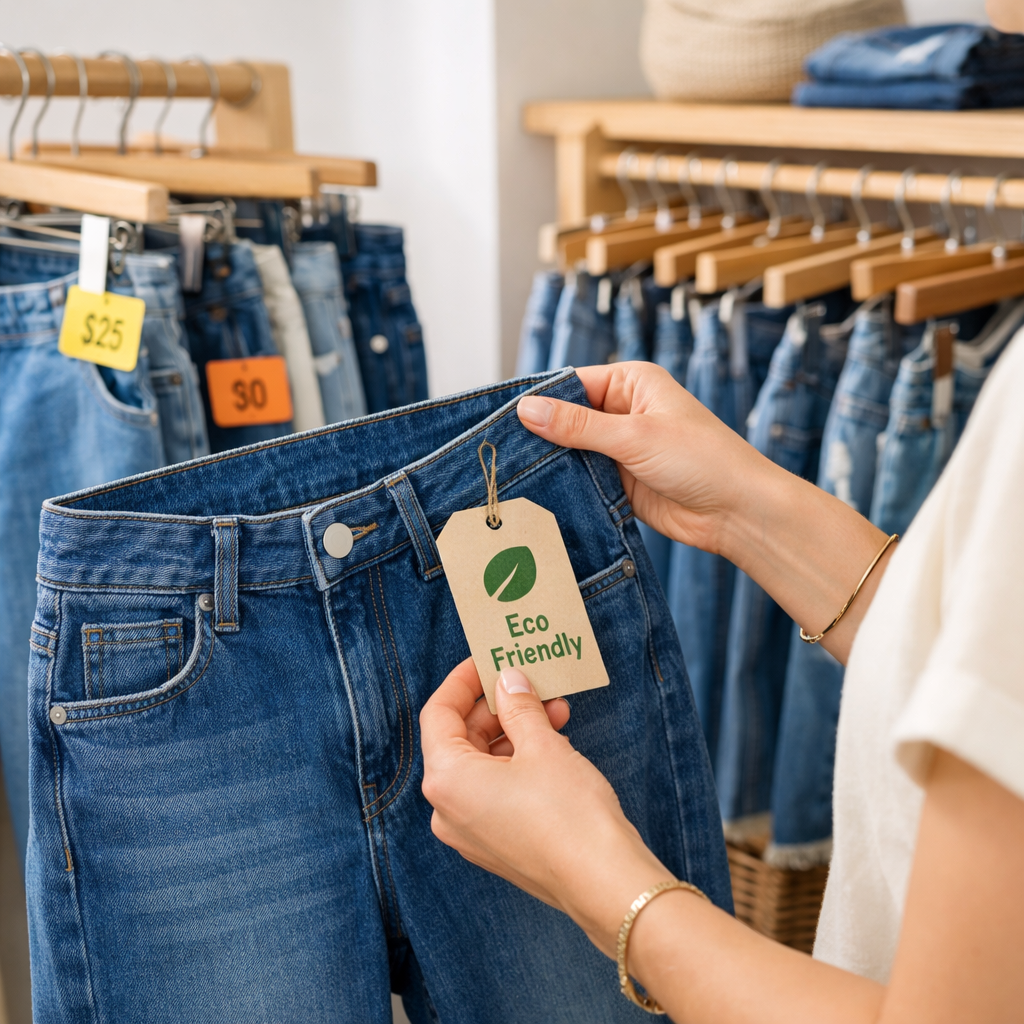
Where To Shop Sustainable Denim Trends Without Blowing Your Budget
Sustainable denim trends don’t have to drain your wallet. Start where value and impact meet: secondhand for vintage cuts and current silhouettes, then add mid-range, water-saving brands that publish real numbers and offer inclusive sizing. Vet fibers and finishes quickly, prioritize timeless fits you’ll wear weekly, and choose circular programs that repair, resale, or recycle your jeans at end of life. The result is a closet that feels current and aligned with your values—without overspending.
Set your budget and define your denim goals
Cost-per-wear is simple math: total price divided by the estimated number of wears; choose durable denim you’ll reach for often and your true cost drops. The most sustainable choice is to wear an item as often as possible for as long as possible (Articles of Style). [1]
Decide your ceiling, wear scenarios, and fits:
- Budget: under $100, $100–$150, $150+
- Where you’ll wear them: commute/work, casual weekends, nights out
- Target silhouettes: straight, relaxed, wide, mid-to-high rise
Budget tiers at a glance:
| Budget tier | What to expect | Examples |
|---|---|---|
| Under $100 | Secondhand steals; direct-to-consumer basics; some recycled/organic blends | Quince, Just Black Denim [2] |
| $100–$150 | Water-saving, size-inclusive denim with better finish tech | Warp + Weft [3] |
| $150+ | Premium build, repairs/take-back, lower-impact finishing | Nudie, Edwin [4][5] |
Choosing durable denim and tracking cost-per-wear helps you buy fewer, better pairs that last.
Start secondhand to find trend and value
Shopping secondhand is the most eco-friendly way to find new-to-you denim and diverts waste (Harper’s Bazaar’s sustainable denim roundup). [3]
Hunt across thrift stores, consignment, curated resale, and online marketplaces. Buying vintage or used extends a garment’s lifespan and reduces textile waste while saving money. [6]
A quick 4-step secondhand scan:
- Read the tag for cotton content and inspect seams for tight, even stitching.
- Stretch and release the fabric to test recovery (avoid bags at knees/seat).
- Measure rise and inseam to your go-to fit.
- Budget for simple tailoring (hems, waist darts) to dial in fit.
Prioritize timeless fits for lower cost per wear
Choose silhouettes that outlast trend cycles: straight-leg, relaxed, and mid-to-high rise cuts pair with sneakers, boots, and heels across seasons.
Buy fewer, better: investing in well-made denim saves money over time because quality pairs last longer (Faircado’s guide). [6]
Cost-per-wear is a value formula—divide price by realistic wears. Opting for durable, versatile jeans lowers cost-per-wear and your environmental impact over time.
Vet materials and processes for real sustainability
Use a fast, factual framework: fibers, finishing, and proof.
30-second label check:
- Fibers: look for organic cotton, TENCEL/lyocell, hemp, or high post-consumer recycled cotton. [7]
- Finishing: laser/ozone/e-flow, closed-loop systems, and gallons of water per pair listed. [3][5][8]
- Proof: percentages (% organic/recycled), water recycling rates, and recognized certifications.
- Traceability: QR codes or supplier maps that verify where and how jeans were made. [7]
Preferred fibers and blends
Prefer organic cotton, TENCEL/Modal, hemp, and high post-consumer recycled cotton for lower-impact durability. MUD Jeans incorporates up to 40% post-consumer recycled cotton. [7] Quince offers budget-friendly organic-cotton jeans starting around $50 (The Good Trade’s denim guide). [2]
Post-consumer recycled cotton is fiber reclaimed from end-of-life garments and textile waste, then mechanically shredded and spun into new yarns. It diverts material from landfill and reduces demand for virgin cotton, lowering water and chemical inputs. Durability depends on blend ratios, length, and yarn quality.
Low-impact finishing methods
Laser, ozone, e-flow, and closed-loop washing can dramatically cut water and chemicals; Outland Denim employs Ozone, e-Flow, and Laser to save water and energy. [7]
Concrete numbers to spot:
- Warp + Weft: about 10 gallons per pair with 98% water recycling. [3]
- DL1961: ~10 gallons per pair and 98% recycling in vertically integrated facilities (Vogue’s roundup). [5]
- Ética InCloud: ~90% less water and ~70% less energy at finishing (No Kill Mag’s guide). [8]
Quick label checks and certifications
Scan for specifics: % organic/recycled content, gallons of water per pair, and % of water recycled; certifications like GOTS and B Corp add credibility (Outland Denim is a certified B Corporation). [7]
Prioritize traceability tools—MUD Jeans uses QR codes that link to factories and suppliers. [7]
The traceability of a garment is the ability to follow materials and production steps through the supply chain, from fiber to finished jeans. Strong traceability verifies sourcing, labor conditions, and environmental practices, turning claims into transparent proof and helping shoppers compare brands beyond marketing language.
Choose circular programs to extend value
Favor brands that keep denim in use longer and reward returns or repairs:
- MUD Jeans’ Lease a Jeans returns denim for recycling or resale, with closed-loop washing. [7]
- Nudie Jeans uses 100% organic cotton and offers free repairs that extend life (CBC’s sustainable denim guide). [4]
- Edwin runs take-back for recycling with credits; Saitex facilities employ laser tech and water recycling. [5]
Circular fashion is a design and business approach that keeps clothing in use long through durability, repair, resale, and recycling. At end of life, materials are recirculated into new products, minimizing waste and resource use, reducing dependence on virgin inputs, and lowering overall environmental impact.
Shop smart with mid-range brands and sales
Budget-friendly standouts with credible proof:
- Warp + Weft: water-saving denim with size-inclusive fits; recycles 98% of water. [3]
- Quince: organic-cotton direct-to-consumer jeans near $50. [2]
- Just Black Denim: sustainable liquid indigo; many styles under $100. [2]
- Everlane: factories report 98% water recycling, renewable energy, and organic cotton use. [2]
Sale discipline:
- Save a wishlist of fits/washes.
- Set alerts for your size.
- Shop seasonal drops and holiday weekends.
- Confirm return windows and free exchanges for size swaps.
Care and repair to make denim last
Wash less and in cold water, skip the dryer, and air dry to preserve fibers; repair instead of replace—habits that reduce impact and extend value (EarthDay.org toolkit). [9]
Mini repair checklist:
- Patch inner thighs before holes spread.
- Re-stitch belt loops and reinforce pocket corners.
- See a tailor for zipper replacement, hems, or waist darts.
Garment longevity is the usable life of clothing shaped by fiber quality, construction, and care habits. Prioritizing maintenance over replacement saves money and emissions. Quality pairs can last decades if cared for correctly (Good On You’s guide). [10] Longer lifespans raise cost-per-wear value and cut waste from frequent, low-quality purchases.
Track progress like your practice
Use a simple tracker: record purchases, wears per item, repairs, and updated cost-per-wear each quarter. Celebrate milestones like 50 wears. Anchor your check-ins to existing routines—after a class at The Yoga Republic is an easy cue.
Insert a mindful buying pause: wait 48 hours before checkout and confirm the jeans work with three outfits.
Consistency compounds—small, repeatable actions create durable results, on the mat and in your closet.
How The Yoga Republic supports sustainable habits
Our evidence-informed, stepwise approach mirrors mindful shopping: structure first, then steady progress. Pair smart denim choices with stress-reducing practices to curb impulse buys and build intentionality you can feel.
Multi-level vinyasa and slow flow classes
Use multi-level vinyasa to sharpen focus and slow flow to practice pacing—skills that translate to deliberate purchase decisions. Join in-studio or online for habit consistency.
Beginner fundamentals
Build confidence with clear cues, modifications, and progressive learning. Start with foundations before chasing trends—just like prioritizing timeless fits that anchor your wardrobe.
Mobility and strength sessions
Functional strength builds resilience and discipline, reinforcing buy-fewer-better choices. Track reps and ranges alongside cost-per-wear logs for a unified, measurable approach.
Breathwork and meditation
Before buying, take 3–5 minutes of box breathing to reset. Short, on-demand practices help align spending with values and reduce impulse purchases.
Workshops and series
Deep-dive series on habit formation and mindful consumption provide structure and accountability. Set quarterly goals: wears-per-item targets, repair skills, and budget adherence.
Membership options
Choose support that fits your routine: drop-in, class packs, monthly unlimited, or our online library. Pair a monthly practice plan with a quarterly wardrobe plan to keep sustainable decisions consistent.
Frequently asked questions
How do I tell if denim is truly sustainable without deep research
Look for specific numbers (% recycled/organic, gallons per pair, % water recycled), credible certifications (GOTS, B Corp), and traceability tools like QR codes. Clear data beats vague “eco” language; a 60-second breathing pause from The Yoga Republic helps you slow down before you commit.
What denim fits will stay in style the longest
Straight-leg, relaxed, and mid-to-high rise silhouettes are seasonless and shoe-agnostic. These versatile cuts maximize wears and lower cost-per-wear.
Is secondhand always the cheapest and most sustainable choice
Usually, yes—secondhand costs less and keeps garments circulating, cutting waste. If size or fit is tricky, look for mid-range, water-saving brands that publish impact data; pair the search with a short pause from The Yoga Republic to avoid impulse buys.
How can I care for jeans to make them last longer
Wash less and cold, air dry, and repair stress points early. These steps preserve fibers, maintain fit, and significantly extend lifespan.
When is it worth investing more in a pair of jeans
When construction, fiber quality, and repair or take-back programs are strong—especially for a silhouette you’ll wear weekly. A higher upfront price can deliver a lower cost-per-wear over time; use The Yoga Republic’s brief breathing reset to confirm it’s a weekly wear.