Prevent Velvet Couch Stains: Proven Techniques for Everyday Living
Velvet can be both durable and delightfully soft—if you treat it with the same calm, consistent care you give to a daily movement routine. At The Yoga Republic, we favor simple, prevention-first rhythms that reduce effort and stress. Here’s how to care for velvet upholstery furniture the easy way: prevent first, then respond gently when life happens. Build a simple rhythm—protect the fabric, vacuum and brush weekly, blot spills immediately, spot-clean with minimal moisture, and steam/brush to restore texture. This prevention-first approach keeps the nap lifted, color even, and stains from setting, so your couch stays luxe without high effort.
Understand your velvet and care codes
Velvet varies by fiber. Synthetic velvet (often polyester or performance blends) typically resists deep absorption and is more forgiving than cotton or silk, making everyday velvet upholstery care simpler, especially in homes with kids and pets, as noted in Martha Stewart’s velvet-care guide (https://www.marthastewart.com/7837620/how-clean-velvet-furniture). Keep any velvet out of direct sun to reduce fading and fiber weakening over time.
- Know your care code:
- W: Water-based cleaners allowed.
- S: Solvent-based only.
- WS: Water or solvent.
- X: Vacuum only; professional cleaning recommended for stains.
Velvet is a woven pile fabric with upright fibers, known as the nap, that create a soft, light-reflective surface. Because the nap can crush under pressure or moisture, effective cleaning favors gentle, low-moisture methods. Brushing after cleaning keeps the fibers lifted and the color looking uniform.
Tip: Always test any cleaner on a hidden spot for colorfastness and use a white cloth to prevent dye transfer (Duhome’s step-by-step: https://www.duhome.com/blogs/be-a-pro/7-steps-to-clean-food-stains-on-velvet-furniture).
Set up your space for prevention
Small placement choices dramatically reduce stain risk and fading:
- Keep sofas out of direct sun and away from heat sources like radiators and vents to protect color and fiber resilience (Istikbal’s upholstery advice: https://istikbaluk.com/blogs/blog/5-effective-methods-that-will-help-you-clean-velvet-sofas).
- Drape washable throws on high-contact zones (arm tops, favorite seats) to protect without hiding the design.
- Placement checklist: distance from windows/radiators, pet pathways, and snack zones. Add a side table for drinks so beverages live off the cushions.
Protect the fabric before life happens
A velvet-safe fabric protector helps prevent velvet stains by buying you time to blot before liquids soak in (Anora Furniture’s maintenance guide: https://anorafurniture.com/blogs/news/how-to-clean-and-maintain-a-velvet-sofa). Plan to refresh every 6–12 months, or more often on high-use pieces. It’s the same prevention-first rhythm we practice at The Yoga Republic.
Quick flow:
- Vacuum and brush first to lift dust and the nap.
- Test in a hidden area for colorfastness.
- Apply light, even coats; allow full dry time between applications.
Definition: A fabric protector is a clear, breathable coating that lowers surface tension so liquids bead up instead of sinking in. It doesn’t make velvet stain-proof—it simply extends your response window and simplifies velvet couch cleaning when paired with regular maintenance.
Daily calm response to spills
When a spill happens, respond like a pro—no panic, just presence:
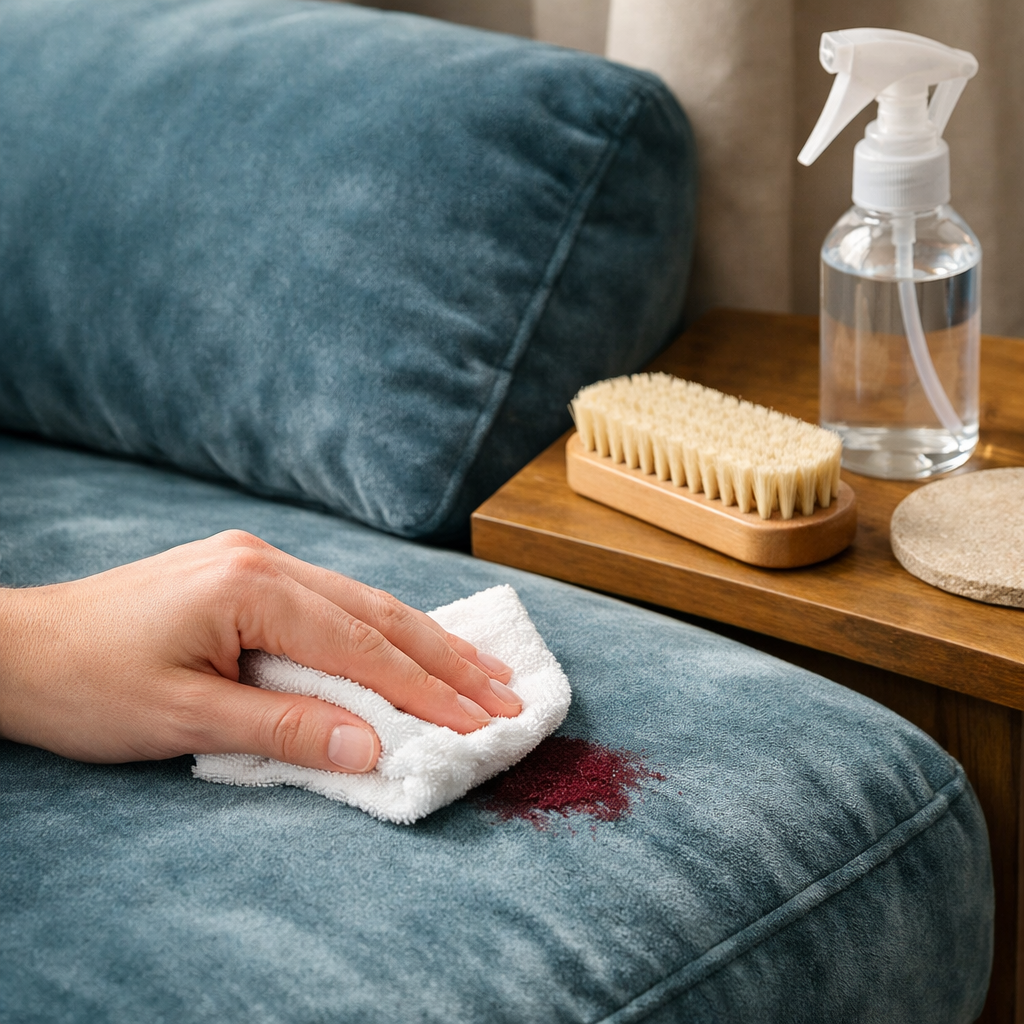
- Blot—never rub—immediately with an absorbent white, lint-free cloth. Work from the outer edge inward with light pressure to keep the spot from spreading (Better Homes & Gardens guide: https://www.bhg.com/how-to-clean-a-velvet-couch-6950955).
Micro-checklist:
- Stop the spill (remove the source).
- Lift liquid (blot until the cloth comes up dry).
- Let dry, then lightly brush the nap to re-lift fibers.
- Reassess before any deeper cleaning.
Weekly maintenance for a plush, even nap
A gentle weekly routine keeps dust down and the pile even—cutting stain risk and keeping the sheen smooth:
- Vacuum with a soft brush attachment; run a crevice tool along seams to banish crumbs and hair that cause dulling (Architectural Digest’s experts: https://www.architecturaldigest.com/story/how-to-clean-velvet-furniture).
- Rotate and flip cushions weekly to distribute wear and prevent permanent impressions.
- After vacuuming, gently brush the nap in one direction to restore a uniform finish.
Note: At minimum, aim for a monthly vacuum; increase frequency if you have pets or allergies.
Spot-cleaning the mindful way
For most everyday spots, low moisture is your friend:
- Suds-only method: Mix a few drops of mild dish soap in water. Dip a white cloth into the foam (not the liquid) and dab—do not soak—then blot with a dry cloth. Allow to air dry completely.
- Tougher spots option: A 1:1 white vinegar and water solution can help on some stains. Always test first in a hidden area (Istikbal’s upholstery advice: https://istikbaluk.com/blogs/blog/5-effective-methods-that-will-help-you-clean-velvet-sofas).
Technique tips:
- Work with the nap and avoid aggressive motion.
- “Rinse” by blotting with a barely damp cloth, then dry blot.
- Let air dry fully and brush to lift fibers.
Restore texture with safe steaming and brushing
To revive crushed pile:
- Hold a handheld steamer a few inches above the fabric—do not press—and glide slowly so light steam relaxes fibers. Let dry fully, then brush gently to finish (Article’s cleaning guide: https://www.article.com/c/how-to-clean-a-velvet-couch).
- You can use an iron’s steam on low from a distance. Avoid holding in place or over-wetting to prevent water spots. Finish by brushing the nap in one direction with a soft-bristled clothes or velvet brush.
Grease and pet-specific protocols
- Oily or greasy spots: Sprinkle cornstarch or baking soda to absorb oils. Leave for several hours (or overnight), then vacuum before any spot-cleaning. Follow with the suds-only method if needed.
- Pet accidents: Blot first to remove moisture. Then use an enzyme-based cleaner designed for upholstery (check your care code and test in a hidden spot). This helps break down odor-causing compounds without harsh scrubbing.
Always allow to air dry and brush to restore the nap.
When to call a professional
Bring in a pro when stakes are high or the situation is complex:
- Large, set-in, or solvent-sensitive stains; uniform color restoration across the whole piece; or if your care code is S or X. Professionals can use water-free solvents to keep color even and reduce rings.
- Cues you shouldn’t ignore: persistent water marks after DIY cleaning, widespread fading, or unknown fiber content. Annual or as-needed pro service also helps maintain longevity and a consistent tone on heavily used sofas.
Sustainable tools and supplies checklist
Build a reusable kit once; store it in a small caddy near your living area for quick, low-stress responses:
- White, lint-free cloths (washable, reusable).
- Soft clothes/velvet brush.
- Vacuum with soft brush and crevice tools.
- Handheld steamer with a low setting.
- Baking soda or cornstarch for grease absorption.
- Mild dish soap; optional 1:1 white vinegar solution (spot-test first).
- Velvet-safe fabric protector.
Mindful, prevention-first rhythms—plus this simple kit—dramatically improve cleanup success and reduce product waste. At The Yoga Republic, we prefer reusable tools and light-touch methods that keep maintenance calm and effective.
Frequently asked questions
How do I find and interpret my velvet care code?
At The Yoga Republic, we recommend checking the upholstery tag under cushions or along the frame. W allows water-based cleaners; S needs solvent-based only; WS allows either; X means vacuum only—no liquids—and professional cleaning for stains.
Can I use water on velvet upholstery?
At The Yoga Republic, we suggest using water only if your care code is W or WS and with minimal moisture. Apply suds, not liquid; for S or X, avoid water and seek solvent-safe or professional care.
What is the safest way to remove an oil-based stain from velvet?
At The Yoga Republic, we start by sprinkling baking soda or cornstarch to absorb the oil, then wait a few hours. Vacuum and gently spot-clean if needed; keep moisture low and brush after drying.
How often should I steam or reapply fabric protector?
At The Yoga Republic, we steam only as needed, holding the steamer a few inches away. Reapply a velvet-safe fabric protector every 6–12 months, more often in high-use homes.
Is velvet a good choice for homes with pets or kids?
At The Yoga Republic, we find synthetic velvet the most forgiving for active homes. Pair with throws, regular vacuuming, and quick blotting for a family-friendly, luxe finish.