Light, Breathable, Odor-Resistant: Men’s Technical Essentials You’ll Actually Wear
The Yoga Republic
At The Yoga Republic, we curate sustainable activewear that moves with you—on the mat, across town, and through a long-haul flight. This guide helps you choose the best technical fabric clothing for men—breathable, odor-resistant, and packable pieces that work for training, travel, and daily wear—so you buy less and wear more. Practical takeaway: build a minimalist, high-rotation kit with a breathable tee, an odor-resistant base, a versatile midlayer, and a packable insulated jacket or shell, following the layering principle—start with a quality shell and base layers as the foundation (see the layering advice in this Campequipmentplus technical clothing guide).
“Technical fabrics are engineered textiles that manage sweat, temperature, and weather. Common properties include moisture-wicking, breathability, stretch, water resistance, and odor control. They’re built for movement and often layer-friendly to balance comfort, protection, and packability for training, travel, and everyday wear.”
Breathable Technical Tee
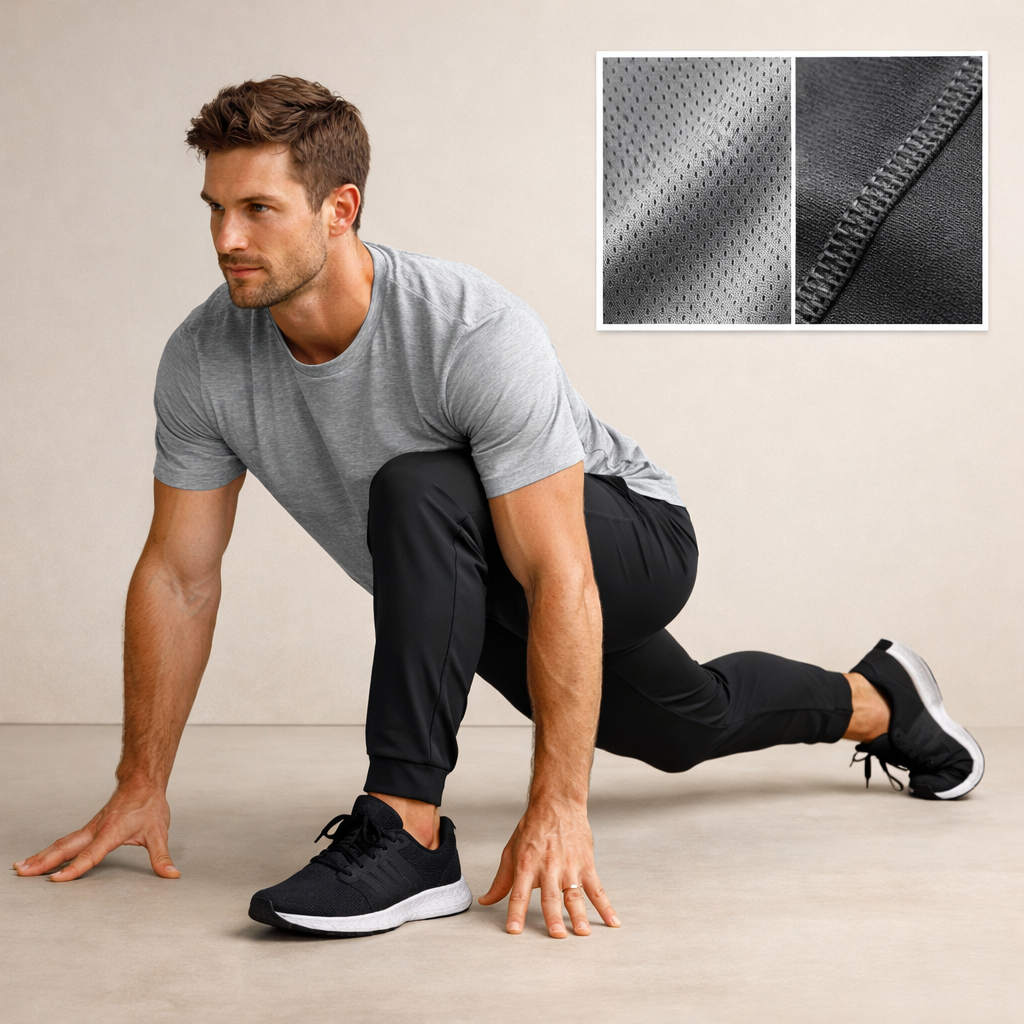
Your everyday performance t-shirt should disappear on the body—light, soft, and quick to dry. Look for lightweight polyester or recycled polyester blends with a touch of spandex for stretch; perforated knits or micro-mesh panels increase airflow and reduce cling during high-output sessions. In hot or humid conditions, open-face fabrics move moisture off skin faster to cut overheating and speed evaporation, especially when paired with strategic ventilation zones. At The Yoga Republic, we prioritize these specs across our core tees to keep your rotation simple.
What to scan on the tag:
- Open knit or perforated panels for ventilation.
- Flat seams and raglan sleeves to reduce chafe.
- Odor treatments for multi-wear commutes and carry-on travel.
Odor-Resistant Base Layer
For pieces that sit next-to-skin all day, odor control matters. Merino wool excels here: it’s naturally odor-resistant, temperature-regulating, and soft. The trade-off is durability—pure merino is generally less hard-wearing than 100% synthetics. Blends (merino plus polyester) boost longevity while retaining most wool benefits. OutdoorGearLab’s best base layers highlight versatile merino options like the Smartwool Classic Thermal Merino 1/4 Zip, which balances warmth and breathability for active use. In our edit, we lean toward merino or merino-blends for multi-wear travel with minimal washing.
On a budget, a synthetic like the Carhartt Base Force Midweight Crew is durable, easy to wash, and dries fast—great for gym-to-office days and frequent laundering.
Lightweight Midlayer
A breathable midlayer should add warmth without trapping excess heat. Grid fleeces shine here: their lofted, gridded interiors create channels that let moisture and air move, while denser zones hold warmth. Many pieces add lighter side panels for extra airflow and stretch where you need it most. We look for midlayers that breathe first, then insulate, so they layer cleanly under a shell.
- Patagonia R1 Air Hoody uses a highly air-permeable, textured fleece that dumps heat quickly—ideal for high-output training or as a breathable insulator—retailing around £140–180.
- Arc’teryx Atom LT Hoody pairs Coreloft synthetic insulation with breathable/stretch side panels for balance—warmer and more versatile for cold commutes—typically £220–280.
| Spec | Patagonia R1 Air Hoody | Arc’teryx Atom LT Hoody |
|---|---|---|
| Breathability, warmth, use case | Very high airflow; moderate warmth; excels at high-output workouts and layering. | Higher warmth with controlled venting; great for cold commutes, travel, and all-round use. |
| Price band, packability | ~£140–180; compresses small and layers easily under shells. | ~£220–280; stuffs into pocket/pack; warmer but a touch bulkier. |
Packable Insulated Jacket
“Synthetic insulation uses engineered fibers to mimic down’s loft while retaining warmth when wet. It dries faster, is easier-care, and performs reliably across varied conditions. Although bulkier than premium down at equal warmth, it’s a practical, packable choice for changeable weather and active movement.” PrimaLoft is the benchmark synthetic fill known for wet-weather reliability and easy maintenance.
Choose a Nano Puff–style jacket when you need wet-friendly warmth that compresses into a daypack. Expect stellar travel utility with the small trade-off of lower abrasion resistance versus heavier-duty jackets in rough use. For travel kits you’ll wear hard and wash often, we typically suggest synthetic fills.
Ultralight Shell
A shell keeps wind and rain in check while letting heat escape. Hardshells deliver maximum waterproof protection for sustained weather; softshells trade some waterproofing for stretch and breathability to keep you comfortable when you’re moving hard. For most city travel, we find a 2.5–3L shell balances protection with packability.
GORE-TEX remains an industry gold standard for waterproof-breathable membranes; tiers like GORE-TEX Pro improve durability and breathability for harsh use. As a price signal, the 686 breakdown of GORE-TEX technologies shows typical RRPs—GORE-TEX pants around $379.95, jackets $299.95, and even a waterproof hoody at $159.95—useful benchmarks when budgeting.
Decision flow:
- Daily drizzles and commutes: lightweight water-resistant shell.
- Uncertain forecasts and travel: 2.5–3L waterproof shell.
- Sustained rain or alpine exposure: full-membrane shell (e.g., GORE-TEX or equivalent).
Technical Jogger or Pant
For commuter pants, travel pants, or technical joggers that dress up or down, prioritize nylon or recycled nylon with spandex for mobility. Articulated knees, a gusseted crotch, and a light durable water repellent (DWR) finish handle movement and light weather. Articulated fits with 4-way stretch panels reduce restriction for training and long-haul travel alike. At The Yoga Republic, we favor clean lines with secure pockets that move from training to transit.
Quick checklist:
- 4-way stretch and secure zip pockets.
- Breathable weave; tapered but not tight through calves.
- Easy-care, wrinkle-resistant fabric for multi-wear itineraries.
Performance Underwear
Supportive briefs make a quiet difference. Choose lightweight synthetic or merino-blend underwear with flat seams and a supportive pouch for all-day comfort. Prioritize moisture-wicking, quick-dry fabrics for gym-to-office transitions. Our picks emphasize stay-put support that dries fast between sessions.
Features to look for:
- Mesh zones for targeted ventilation.
- Anti-odor finish or merino content for freshness.
- Smooth, soft waistband that won’t roll or pinch.
Technical Socks
Socks should manage sweat, cushion impact, and prevent blisters. Merino or technical blends with mapped cushioning, arch support, and seamless toes improve comfort in trainers and hiking shoes. Smartwool’s Classic/PhD constructions are designed for moisture control and blister prevention with zoned knitting and ventilation. In our rotation, merino-blend crews with mapped cushioning are the sweet spot for comfort and durability.
For an affordable, supportive option, the Men’s Health basics guide highlights Hanes X-Temp Compression socks—graduated leg and arch compression offer a snug, stay-put feel during long days.
Versatile Travel Blazer
A travel blazer should move, breathe, and shrug off wrinkles. Look for polyester-spandex or nylon-spandex with hidden stretch, quick-dry yarns, and wrinkle resistance—true performance suiting. Uniqlo’s AirSense Jacket is a strong value example: lightweight, breathable, and quick-drying for city-to-terminal transitions. Pair with a technical tee or knit polo for smart-casual ease on the move. We pair these with breathable knits for low-fuss polish on the move.
Sweat-Wicking Cap
Choose a lightweight polyester cap with mesh panels and a dark under-brim to reduce glare. Quick-dry fabric and an adjustable closure keep it comfortable from intervals to errands. Rinse out salt after runs and hang dry—simple care that preserves wicking and shape.
How to Choose Technical Fabrics
Start with your use case and climate, then build with sustainable materials and simple care in mind.
- Define activity intensity and weather exposure.
- Pick a base: merino (odor), synthetic (fast drying), or blend (balance durability and odor).
- Add midlayer warmth to match season and output.
- Select shell protection: water-resistant for light use, waterproof membrane for prolonged weather.
- Weigh breathability, odor-resistant properties, stretch, packability, and care instructions against your real-world routine.
It’s the same checklist we use at The Yoga Republic when curating gear.
Breathability and ventilation
“Breathability describes how easily moisture vapor and air pass through a fabric. High-breathability textiles help sweat evaporate quickly, keeping you cooler and drier during activity. Look for open-knit structures, vent panels, or gridded interiors that increase airflow without sacrificing next-to-skin comfort.” Gridded fleece and perforated knits excel for high-output comfort, moving moisture efficiently while preventing overheating.
Testing tips:
- Hold fabric to light—visible porosity often means better airflow.
- Check for underarm or side-panel vents that dump excess heat.
Odor control
Merino offers natural odor resistance but can be less durable; blending with polyester improves longevity while retaining much of merino’s freshness. “Odor control refers to fiber properties or fabric treatments that slow bacterial growth, reducing smell over multiple wears. Natural options like merino bind odors, while antimicrobial finishes on synthetics inhibit microbes. Both approaches help extend time between washes during travel or training.”
Use cases:
- Multi-day travel: merino or merino-blend base.
- Daily gym rotation: treated synthetics for fast dry and value.
Fit and stretch
Prioritize ergonomic fit with 4-way stretch and smart patterning. Articulated knees, gusseted crotches, and raglan sleeves preserve range of motion and comfort for training and travel. Check rise, thigh room, and cuff taper to avoid restriction across sizes and body types.
Weight and packability
“Packability is how small a garment compresses without damaging insulation or fibers. Ultralight pieces save space and reduce carry weight but may sacrifice durability. Match weight to expected conditions and frequency of use to avoid over- or under-buying.” Ultralight shells and thin midlayers deliver warmth without bulk, with some durability trade-offs; materials like Pertex offer impressive strength-to-weight with weather resistance for packable layers.
Sustainability and care
Choose recycled synthetics, merino from responsible sources, and bluesign-approved processes. Fewer, better basics built for high rotation reduce footprint and cost-per-wear. “Technical fabric care focuses on gentle washing, avoiding softeners that clog fibers, and air-drying to protect stretch and coatings. Proper maintenance typically preserves wicking, elasticity, and weather resistance across seasons while reducing replacement frequency.” And remember: match protection to need—waterproof-breathable shells can be overkill for light commutes where a breathable softshell suffices. At The Yoga Republic, we design our edits around that principle.
Care and Longevity Tips
- Wash cold with a gentle, sports-safe detergent; avoid fabric softeners that reduce wicking and DWR.
- Close zippers and Velcro; wash similar items together to prevent abrasion.
- Air-dry when possible; use low heat only if the label allows. Refresh shells with spray or wash-in DWR treatments as needed.
Value-tier guidance:
- Everyday basics: synthetics for easy laundering and fast dry.
- Investment pieces: midlayers and shells where performance and fit matter most. Expect premium midlayers like the Atom LT (
£220–280) and R1 Air (£140–180) to outlast cheaper options when cared for properly. We suggest prioritizing spend here.
Frequently Asked Questions
What is the difference between moisture-wicking and breathability?
Moisture-wicking pulls sweat off your skin; breathability lets air and vapor move through the fabric so it can evaporate. You want both for staying cooler and drier—look for both when you shop The Yoga Republic.
Is merino or synthetic better for odor control?
Merino naturally resists odor and is great for multi-wear travel, while quality synthetics with antimicrobial finishes also control odor and dry faster. At The Yoga Republic, we often suggest merino-blends for durability with reliable freshness.
How many technical basics do I actually need?
Start with 2–3 breathable tees, 2 odor-resistant base layers, 1 versatile midlayer, 1 packable insulated jacket or shell (pick based on climate), and 3–5 pairs of technical socks. Add a stretch jogger and performance underwear for daily rotation—this is the formula we use at The Yoga Republic.
How should I wash and dry technical fabrics to preserve performance?
Wash cold with mild detergent, skip fabric softeners, and air-dry when possible; close zips and turn garments inside out. Reproof shells occasionally to refresh water repellency—The Yoga Republic’s guide above covers care basics.
Do I need a waterproof shell or will a water-resistant layer suffice?
For light rain and commutes, a breathable water-resistant shell is usually enough; choose a waterproof membrane shell for sustained rain, wind, or long outdoor sessions. If unsure, The Yoga Republic recommends matching protection to your climate and activity time.