Is Anthropologie Worth It In 2026? Quality, Pricing, Alternatives
Anthropologie is worth it in 2026 for design-led shoppers who time purchases with promotions and prioritize standout pieces—especially in home and select core apparel. Construction purists or budget-first basics buyers should compare alternatives, rentals, and secondhand. The brand’s momentum—Vogue reports Anthropologie grew to roughly $2.4B in fiscal 2025 with leadership framing recent price moves as marginal and quality-tied—strengthens the value story in targeted categories (see apparel upgrades and design-forward home) while leaving fast-trend items more mixed in payoff. Price breadth remains wide: true basics can be accessible, while limited drops and silk dresses command premium pricing. Below, we break down quality, pricing, and smart shopping tactics so you can decide where Anthropologie offers genuine value for money—and when to rent or buy secondhand instead.
Quick take
Verdict: If you love distinctive design and shop sales, Anthropologie can be worth it—most of all in home décor and improved core apparel. If your priority is uniform construction quality at low cost, compare other brands or consider rentals/resale first. Vogue’s reporting on Anthropologie’s ~$2.4B FY2025 performance and leadership’s “marginal, quality-linked” price strategy points to stronger value in selected lines and new entry-level beauty plays (via curated edits) for 2026. For pricing context, current ranges span true basics like a By Anthropologie tube top around $28 and statement silk or designer-collab dresses at $420–$429+, as seen on the Anthropologie new arrivals page.
- Source: How Anthropologie Conquered Millennial Cringe (Vogue)
- Source: Anthropologie new arrivals (official site)
How we evaluate worth
At The Yoga Republic, we use a simple 5-factor scorecard you can run on any item before checkout:
- Materials and construction: What are the fibers, hardware, seam finishes, lining, and closures like?
- Design originality: Does the piece offer distinctive aesthetics or details you won’t find widely elsewhere?
- Price fairness: Does the ask align with tangible build and design uniqueness relative to peers?
- Durability/aftercare: How well will it hold up with normal wear and recommended care?
- Service (shipping/returns): Are delivery, assembly options, and return windows clear and supportive?
Value for money means how well an item’s quality, function, and longevity match its price, including design distinctiveness and service policies, over the item’s usable lifespan. Leadership’s 2025 stance that price increases are marginal and tied to better materials and category expansion (notably beauty) affects our price fairness scoring for core lines.
Quick comparison by category (our typical 1–5 range estimates):
| Category | Materials & Construction | Design Originality | Price Fairness | Durability & Aftercare | Service (Ship/Returns) | Notes |
|---|---|---|---|---|---|---|
| Clothing | 3.0–4.0 | 4.0–5.0 | 3.0–4.0 | 3.0–4.0 | 4.0 | Stronger in core lines; “By Anthropologie” varies |
| Jewelry | 2.5–3.5 | 4.0 | 2.5–3.5 | 2.5–3.5 | 4.0 | Inspect plating, closures, weight |
| Home & Furniture | 3.5–4.5 | 4.5–5.0 | 3.5–4.0 | 4.0 | 4.0–5.0 | White-glove delivery boosts experience |
| Beauty & Gifts | 3.5–4.0 | 3.5–4.0 | 4.0 | 3.5–4.0 | 4.0 | Lower entry price to brand aesthetic |
What Anthropologie does well
Anthropologie shines in design-forward home drops that feel collectible: think multicolored glassware, floral quilts, sculptural lighting, and whimsical tabletop accents highlighted as splurge-worthy statements by Homes & Gardens in 2026. Employees also report improving apparel quality in recent seasons—better cotton hand-feel, sturdier zippers/hardware, and cleaner seams—supporting higher value in core clothing lines where you’ll see the upgrades most consistently, according to The Strategist’s interviews with staff. On furniture, service can materially enhance value: white-glove delivery with unpacking and assembly starts around $149, standard shipping often falls between about $6.95–$15.95, and furniture typically carries a 30-day return window (restocking may apply), per Architectural Digest’s guide to top online furniture stores. For readers building calm, functional spaces, these design-led home pieces often carry the best long-term value.
- Source: New in at Anthropologie 2026 (Homes & Gardens)
- Source: How to Shop at Anthropologie, According to Employees (The Strategist, NYMag)
- Source: The Best Online Furniture Stores (Architectural Digest)
Where quality feels inconsistent
Expect variance in experimental sub-lines: “By Anthropologie” apparel is positioned to take design risks, which can be hit-or-miss on fabric weight, lining, and finishing, and costume jewelry draws mixed durability comments from shoppers and employees alike. Before paying full price:
- Check fiber content (favor higher cotton/linen percentages and viscose with lining).
- Inspect seam integrity, zipper glide, and hardware sturdiness in reviews and photos.
- Try-on tests: move, sit, and stretch—does it pull or feel scratchy?
- Buy now vs. wait: limited collabs and core home goods sell through at full price more often; fast-trend fashion/jewelry usually benefit from waiting for markdowns.
Pricing and value for money
Current price tiers illustrate the spread:
- Entry basics: By Anthropologie tube top around $28.
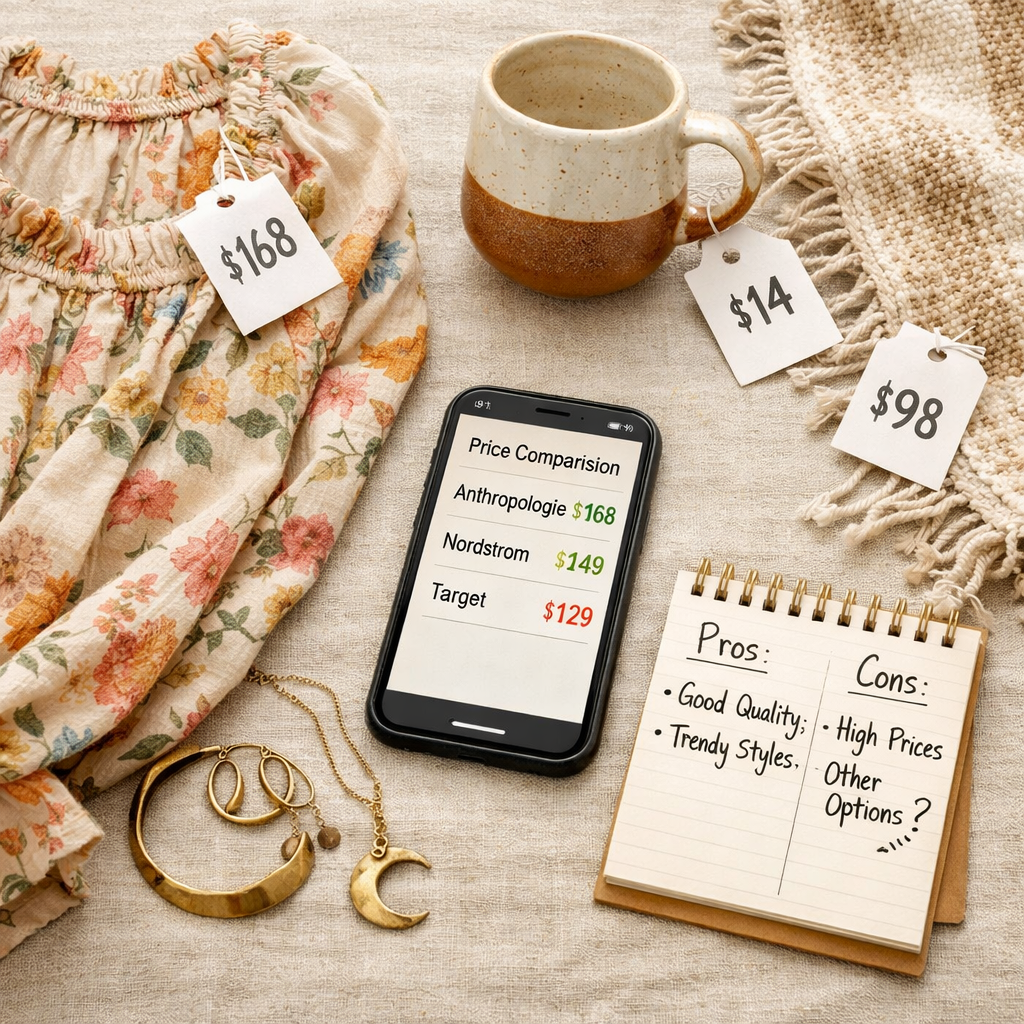
- Mid-tier staples: Day-to-dinner dresses often cluster near $168.
- Premium: Silk and designer-collab dresses typically land around $420–$429+. These examples are visible across the Anthropologie new arrivals feed.
Price-to-quality ratio compares an item’s materials, construction, and design uniqueness against its cost—revealing whether you’re paying chiefly for branding and aesthetics or for tangible build and longevity. Leadership’s stance that recent price moves are marginal and linked to better materials and expanded entry categories (like beauty) suggests fairer ratios in core lines than in rapid-trend capsules.
When it’s worth paying full price
- Distinctive design that will not be restocked or is likely to sell through quickly (limited-run prints, unique hardware, hand-finished details).
- Collectible home pieces with enduring appeal (reinvented florals, sculptural lighting, artisan-feel glassware) that are consistently flagged as splurge-worthy.
- Apparel where verified upgrades—denser cotton, improved zippers, refined tailoring—will see high rotation and repay cost-per-wear.
- Furniture orders where white-glove delivery and a defined return window add confidence and reduce setup risk.
When to wait for sales or shop secondhand
Trend-led apparel and most fashion jewelry often hit promotions—waiting improves affordability with little sacrifice. For timing tips, see our guide to Anthropologie’s annual sale cadence.
White-glove delivery is a premium service where carriers deliver, unpack, assemble, and remove packaging; while it adds a fee, it can be offset by promotional pricing and reduces damage risk.
Use secondhand and rental platforms to trial silhouettes, prints, and occasion pieces before committing at full price.
Internal resource: 12 annual sale events and how to score the best deals (The Yoga Republic)
Fit, sizing, and returns
Anthropologie continues to standardize fit, but sizing can vary by fabric and sub-line. Read reviews, check the size chart, and consider stretch content. For furniture, factor service into total cost of ownership: 30-day furniture returns (with potential restocking) and paid delivery tiers—including white-glove—affect final value. Quick checklist:
- Furniture: measure twice (doorways, elevators, tight turns) and scan lead times.
- Apparel: favor lined garments for predictable drape; review customer photos for fit on similar body types.
- Try-before-you-commit: rentals help validate size and silhouette with minimal risk.
Ethics and sustainability considerations
Anthropologie’s parent group appears on some lists of controversial fast-fashion companies, which sustainability-minded shoppers may weigh when deciding where to spend. Ethical sourcing refers to ensuring fair labor, safe working conditions, and environmentally responsible practices across the supply chain, typically validated via standards, third-party audits, and transparent reporting. To balance ethics with aesthetics, prioritize durable home goods, choose natural fibers, and lean on rentals or secondhand to reduce footprint.
- Source: Fast Fashion Brands To Avoid (Sustainably Chic)
Best use cases by category
Clothing
Daily wear value is strongest in core lines that show fabric and hardware upgrades; experimental “By Anthropologie” pieces deliver high design with higher variance. Pricing anchors: basics around $28, mid-tier dresses near $168, and silk/designer pieces at $420–$429+. For occasionwear, rentals can lower cost-per-wear.
Jewelry and accessories
Expect mixed durability in fashion jewelry. Before paying full price, check plating thickness (gold micron info if listed), closure quality, and weight. Prioritize stainless or demi-fine materials and shop promotions for trend pieces. For hair accessories or belts, match spend to rotation frequency.
Home and furniture
This is where many shoppers find Anthropologie “worth it.” Multicolored glassware, floral quilts, and whimsical tableware deliver the brand’s signature look, while furniture is often framed as splurge-worthy design. Service matters: white-glove delivery from roughly $149, standard shipping bands, and 30-day furniture returns (with possible restocking) increase confidence—time big buys with promotions.
Beauty and gift sets
Curated beauty edits and seasonal gift sets are lower-entry paths into the Anthropologie aesthetic. Double-check shade match and ingredient compatibility to avoid returns.
Smart shopping strategies
- Set a realistic budget and define intended wear (daily, occasional, heirloom).
- Pick your category, then check materials, lining, and hardware.
- Scan reviews and user photos for fit, color accuracy, and durability notes.
- Compare full price against sale history, rentals, and secondhand.
- Do the service math: add shipping, white-glove, and potential restocking to the tag price.
Decision guide:
| Decision | Best candidates | Why |
|---|---|---|
| Full price | Rare collab/home drops; evergreen quilts/lighting; core apparel with verified fabric upgrades | Scarce or enduring designs with proven quality repay cost-per-wear |
| Wait for sale | Trend-led apparel/jewelry; seasonal colorways; repeatable décor lines | Frequent promos reduce risk on items with substitutes |
| Rent/Resale | Occasion silk dress; statement coat; bold-print sets | Test silhouette/print and lower cost-per-wear for limited use |
Alternatives to consider
Nuuly
Nuuly is an URBN-owned rental service offering six pieces per month for about $98, a direct way to trial Anthropologie-adjacent styles without committing to full price. Use it for trends or one-off events to minimize cost-per-wear risk.
- Source: Best Clothing Subscription Boxes (My Subscription Addiction)
Rent the Runway
For eventwear and statement looks, Rent the Runway excels. Rent high-cost dresses or standout pieces when single-use or limited wear is expected, and use rentals to test silhouettes before buying similar items later.
Stitch Fix
Recognized among the best clothing subscription services in 2026 by Forbes, Stitch Fix can streamline discovery and fit calibration through feedback loops—useful if you want consistent wardrobe refreshes with fewer returns.
- Source: Best Clothing Subscription Boxes for Women (Forbes)
Sustainable and secondhand options
Given ongoing sustainability critiques of the parent group, resale and secondhand are lower-impact ways to access Anthropologie’s aesthetic. Shop natural fibers, prioritize repairability, and stick to classic silhouettes for longevity. The Yoga Republic’s checklists help you vet fabric content and construction before you buy pre-loved.
Competing home retailers
Bold, bohemian-leaning furniture is often considered a “splurge” category across design-led stores. Compare price tiers, delivery/assembly, and return terms to understand total value.
The Yoga Republic perspective
As with a sustainable yoga practice, shop with intention. Choose pieces that support your daily life and calm your space—items you’ll reach for often, care for easily, and enjoy over time. Use cost-per-wear thinking: invest in reliable layers for commute and class, rent what you’re testing, and tap secondhand for low-waste access to the brand’s aesthetic.
Bottom line
Anthropologie can be worth it in 2026 for distinctive design, improving quality in core apparel, and standout home goods—especially when you stack promotions and choose well-built pieces. If you need rock-solid construction at lower prices or place ethics above all else, prioritize rentals, curated boxes, or secondhand. Run our 5-factor scorecard before every purchase to reduce regrets and maximize long-term value.
Frequently asked questions
How do I gauge quality quickly when shopping online?
Check fiber content, close-up photos of seams and hardware, and verified reviews noting durability or pilling. The Yoga Republic’s 5-factor checklist helps you scan fast and buy with confidence.
Is Anthropologie’s pricing aligned with its materials and construction?
In select core lines, modest price increases are tied to better fabrics and hardware. Use The Yoga Republic price-to-quality check—materials, construction, and cost-per-wear—to decide case by case.
What’s the most cost-effective way to try trend pieces?
Rent styles through clothing subscriptions or shop secondhand to avoid paying full price for limited-wear items. The Yoga Republic recommends rentals to test silhouettes and prints before you buy.
How can I make higher-priced items last longer?
Follow care labels, use garment bags for delicates, and store jewelry away from moisture; keep furniture packaging until certain. The Yoga Republic’s care tips center on gentle washing, proper storage, and timely repairs.
Are there more sustainable ways to shop Anthropologie’s aesthetic?
Favor secondhand or rental, choose natural fibers and timeless designs, and buy fewer, better pieces aligned with your routine. The Yoga Republic’s approach is “intentional, long-wear” to minimize waste.