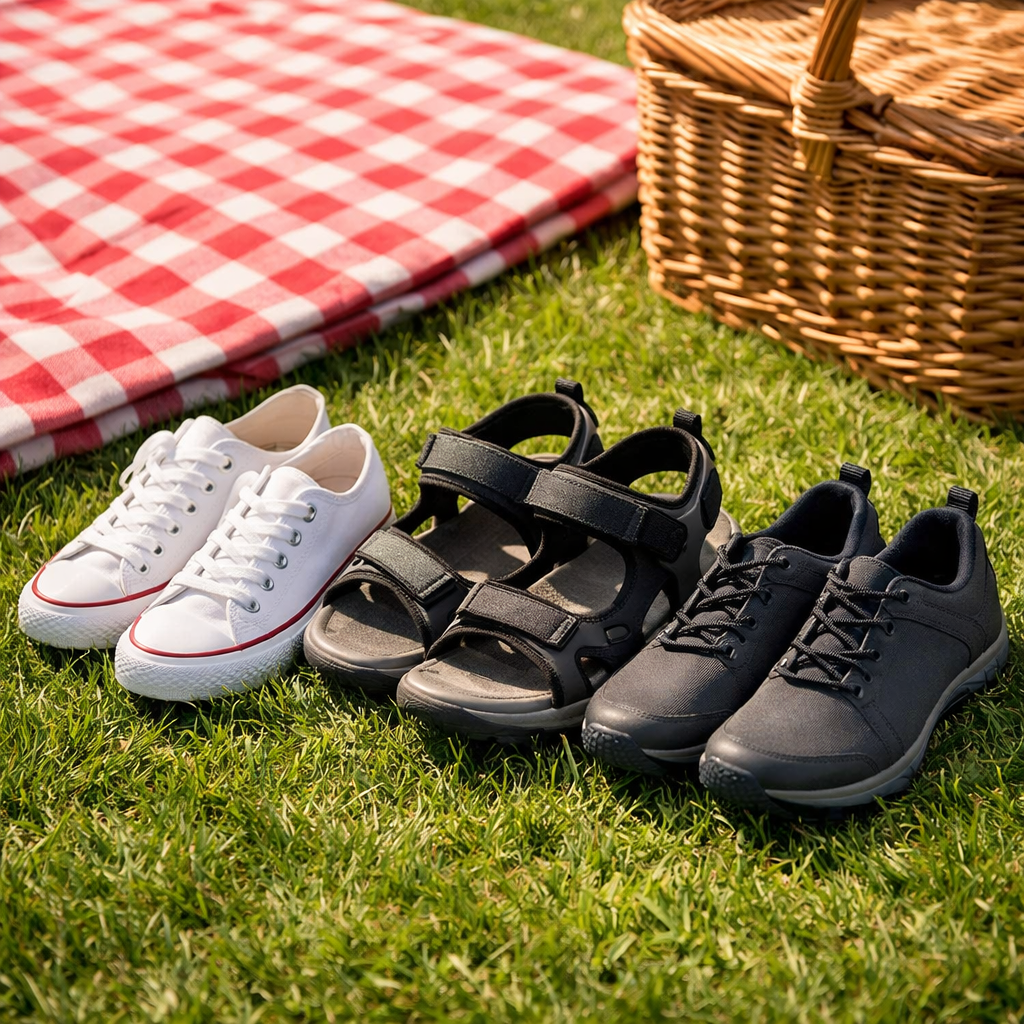
How to Choose Shoes for Picnics and Outdoor Grass Events
A great picnic (or any outdoor lawn event) starts from the ground up. The best women’s shoes for a grass picnic balance stability, comfort, and style so you can move easily, avoid sinking into soft turf, and stay blister-free all day. Begin by reading the ground and the forecast, then match shoe type, materials, and support features to the conditions. From breathable mesh sneakers to wedges that won’t spear the lawn, this guide distills what to wear, why it works, and how to test your pick before you go—rooted in mindful movement and all-day ease. For most grassy venues, think wider bases, non-slip soles, and cushioned support; adjust for moisture and dress code, and you’re set.
Start with the terrain and venue
Where you’ll walk dictates what you should wear—different surfaces demand different footwear, so match your choice to the ground and activity you’ll do, from flat lawns to hilly parks (see this practical guide to choosing outdoor shoes). The goal: stay grounded and prevent sinking, slipping, or sore feet by increasing contact area and grip on grass.
Quick venue cues to scan:
- Lawn type: freshly watered, dry, uneven, or compact
- Slope: flat, gentle incline, or hillside
- Distance: from parking to picnic spot (and back)
- Paths: paved walkways vs. thick turf or mixed dirt-and-grass
Lawn stability describes how firm or supportive the ground feels underfoot. Firm lawns support narrow heels or flats; soft or soggy lawns require wider soles, grippy tread, and lower, stable heels to reduce sinking and slips.
Check the forecast and plan for moisture or heat
Weather drives materials and features. If rain or heavy dew is likely, prioritize waterproofing; in heat, choose breathable mesh or perforated uppers to keep feet cool. In colder or wet seasons, boots or clogs excel; in warm, dry weather, sandals or airy sneakers are ideal (solid picnic shoe tips highlight this simple, seasonal logic).
Weather-to-footwear quick picks:
| Condition | Best picks | Features to prioritize |
|---|---|---|
| Dry / Hot | Breathable mesh sneakers; grass-friendly wedges; strapped sandals | Ventilation, light colors, cushioned insoles |
| Damp (AM dew) | Supportive walking shoes; low wedges; water-resistant flats | Water-repellent uppers, tread, toe protection |
| Rainy / Muddy | Waterproof clogs; ankle boots for grass | Sealed seams, rubber soles, easy-clean finish |
| Evening Chill | Sneakers or ankle boots; closed-toe flats | Warm socks, stable soles, secure straps |
Prioritize comfort and support
Comfort should be your top priority for picnic shoes—long-wear comfort beats any trend when you’re on lawns for hours. Look for arch support shoes with cushioned insoles, a secure heel/forefoot fit, and non-slip soles to reduce fatigue and friction. Cushioned insoles help absorb impact and soften pressure points on variable ground, a staple recommendation in garden footwear advice. A snug-but-not-tight fit around the midfoot prevents sliding and blisters during lawn games and lingering walks. At The Yoga Republic, we prioritize supportive, cushioned bases and secure fits that let you move with ease on variable ground.
Match shoe type to activity and ground
Map your plan (distance, dress code, terrain) to the right category:
- Short walk + soft turf: Wedges or block heels for lift without sinking; or supportive sneakers for maximum stability.
- Mixed paths (grass + pavement): Supportive walking shoes or breathable mesh sneakers with grip soles for grass.
- Dressy lawn events: Wedges or short block heels; add heel protectors for narrow heels.
- Casual, dry picnic: Grass-friendly flats with structured soles or strapped sandals.
- Wet or muddy park: Waterproof picnic shoes like easy-clean clogs or ankle boots with tread.
Wider heel bases and grippy tread increase surface area, improving balance and reducing the chance of sinking on lawns—advice echoed by event-shoe guides and grass-friendly style roundups.
Definition—traction (40–50 words): Traction is a sole’s ability to grip the ground and resist sliding. On grass—especially damp or uneven lawns—effective traction comes from tread patterns, rubber compounds, and increased surface area that boost friction. Good traction helps you stay stable while walking, standing, or making quick direction changes.
Sneakers and walking shoes for mixed terrain
Choose supportive walking shoes or breathable mesh sneakers with firm arch support and grip soles for grass. If it’s hot, emphasize airflow; if showers loom, opt for water-resistant uppers. Try them on and wear them around the house first to verify comfort and fit before you commit to a full day.
Block heels and wedges for dressier lawn events
For elevation without lawn sink, block heels and wedges distribute weight across a larger area, feeling steadier on grass. Keep heel heights moderate and add ankle straps for security on uneven ground. Heel protectors can widen slim heel tips for better balance, a proven trick from outdoor event stylists.
Flats and strapped sandals for relaxed, dry grass
On firm, dry lawns, flats with structured soles and supportive sandals with secure straps are easy, breathable choices. Skip flimsy, unsupportive styles on uneven ground. Prioritize airy uppers (mesh or perforated leather) to keep feet cool during summer picnic stretches.
Waterproof clogs or ankle boots for wet or muddy lawns
Slip-on waterproof clogs rinse clean and transition smoothly between grass and garden tasks—durable, easy-clean clogs are built for exactly this environment. For cooler or very wet events, choose ankle boots for grass with waterproofing and tread; maintaining leather with conditioner adds water resistance and extends life.
Select materials that handle grass and cleanup
Prioritize durable, easy-care uppers like leather or quality synthetics paired with rubber soles; inspect stitching and sole bonding for longevity. Natural leathers and suede can be spot-cleaned and revived with protectants, while many synthetics and rubberized finishes are quicker to wash and dry—useful contrasts highlighted in outdoor event shoe advice.
Definition—waterproof vs. water-resistant (40–50 words): Waterproof shoes prevent water from entering under normal exposure thanks to sealed materials and seams. Water-resistant shoes repel light moisture but can allow water through over time. On wet grass, water-resistant may suffice; for steady rain or mud, true waterproofing is more reliable.
Test fit and stability before the event
Do a lawn stability test: wear your pick for 30–60 minutes on similar ground. If you feel hot spots, wobble on slopes, or sink into soft turf, re-evaluate. This pre-event check, a favorite from adventure elopement pros, beats day-of surprises. A proper fit is your best blister prevention—allow a brief break-in period and confirm secure heel hold and midfoot wrap.
Pack a smart backup and quick-care kit
Bring a lightweight spare pair—flats, supportive sneakers, or waterproof clogs—in case conditions flip. Tuck in: heel protectors, stain wipes, a mini waterproof spray, band-aids, and spare insoles for quick comfort fixes. For longer days, moisture-smart socks help manage sweat and reduce blister risk.
Style with mindfulness and movement in mind
Choose shoes that support natural gait and posture: stable soles, secure straps, and manageable heel heights that let you sit on blankets, stand for 1–2 hours, and play light games in ease. Outfit ideas:
- Dressy lawn party: Wedge + midi dress
- Casual picnic: Breathable sneaker + linen shorts
- Wet lawn: Ankle boot + cuffed jeans
At The Yoga Republic, we favor inclusive, comfort-forward choices that keep you grounded—so you can move mindfully, enjoy the moment, and still look polished.
Frequently asked questions
What shoes are most comfortable for walking and sitting on grass?
Supportive walking shoes or sneakers with arch support and cushioned insoles keep feet comfortable across mixed lawns and longer sits. At The Yoga Republic, we look for a snug midfoot and a stable base for lawns.
Do I need special grip for damp or uneven lawns?
Yes. At The Yoga Republic, we prioritize grippy rubber tread to reduce slips on damp or sloped grass.
Are hiking boots necessary for a picnic?
Not usually. At The Yoga Republic, we reserve them for rugged trails; on flat parks or lawns, supportive sneakers, flats, or wedges with stable bases work well.
How do I prevent blisters at an outdoor grass event?
Wear broken-in shoes, add cushioned insoles if needed, and pair with moisture-wicking socks—our go-to approach at The Yoga Republic. Test for 30–60 minutes in advance to spot hot spots.
What should I wear if the grass is wet or rain is likely?
Pick waterproof clogs or ankle boots with tread, or sneakers with water-resistant uppers. At The Yoga Republic, we also pack a spare pair and a quick-care kit in case conditions change.
Practical guide to choosing outdoor shoes • Picnic shoe tips • Adventure elopement shoe guide • Garden footwear advice • Best shoes for an outdoor event • Grass-friendly shoes roundup • Garden clogs that rinse clean