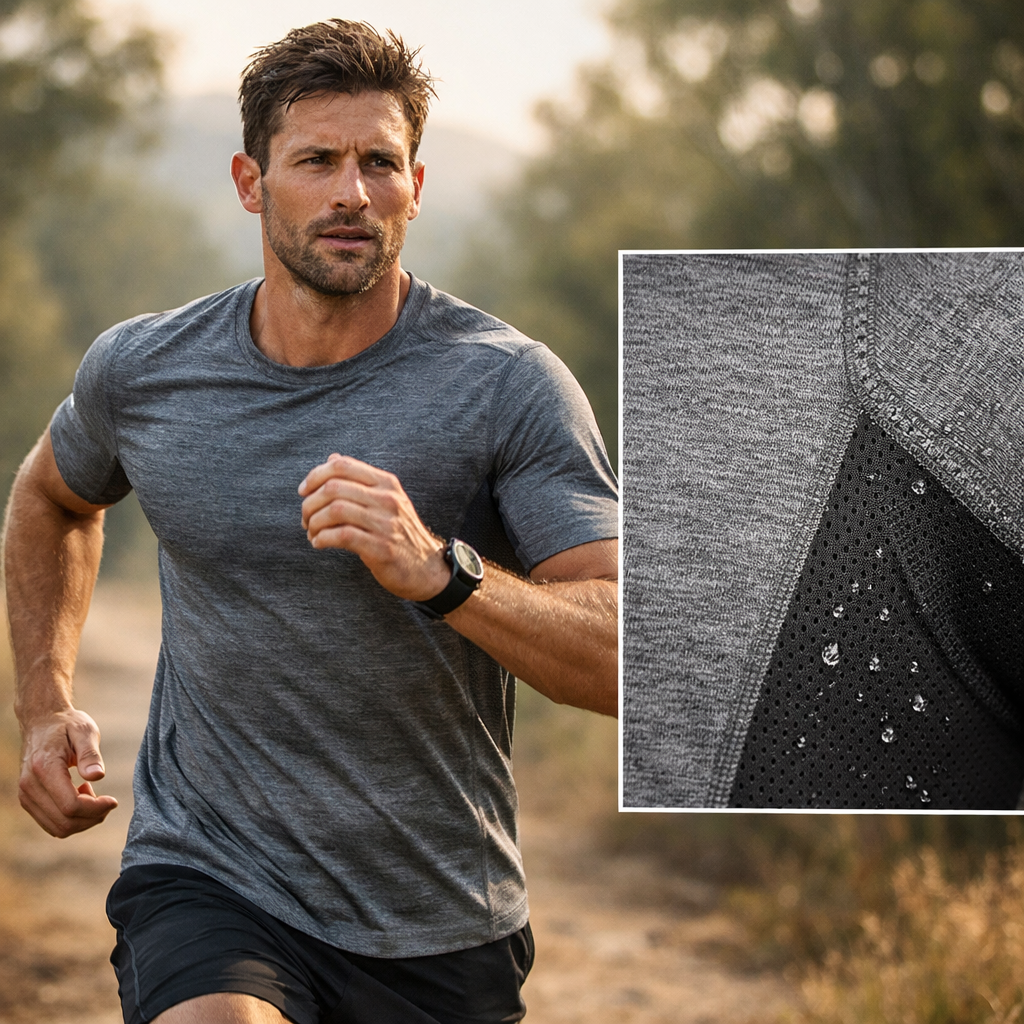
How to Choose Odor-Resistant Men’s Tees for Endurance Training
The right tee should stay fresh from the first mile to the last, dry quickly between efforts, and feel good against skin when you’re pushing pace. For most endurance athletes, the best men’s tees that stay fresh during long workouts fall into three camps: high-merino shirts for multi-day odor control, engineered polyester/nylon for the fastest drying and durability, and modern blends that balance both. Start by matching your priority—multi-day freshness, quick-dry, or max durability—to your climate and wash routine, then confirm label details like merino percentage, knit weight (GSM), and any antimicrobial finish. Moisture wicking is a fabric’s ability to pull sweat from the skin to the outer surface through capillary action, where it can evaporate quickly; this keeps you drier, cooler, and less prone to odor during long workouts, as explained in this guide to moisture-wicking fabrics (RVCA). With a few checks, you can choose a tee that performs on hard efforts and holds up to daily miles. At The Yoga Republic, we design tees around these pillars so they work from tempo runs to travel.
Clarify your training and odor priorities
What’s primary—multi-day freshness, fastest drying, or maximum durability? First define your main activity (long runs, hot intervals, multi-day travel), your climate (humid heat vs cool mornings), and how often you can wash. Higher merino content shines in multi-day odor control; synthetics excel at quick-dry and abrasion resistance; blends balance both (Wirecutter’s 72-Hour Merino Tee review). Many running-focused guides note that close fits, breathable knits, and efficient wicking underpin freshness across all fabrics (tasc’s running shirts guide). The Yoga Republic offers high-merino, engineered synthetics, and balanced blends so you can match fabric to your routine.
Use-case vs best fabric family:
| Use-case | Best fabric family | Why it works |
|---|---|---|
| Long, cool runs; multi-day travel | High-merino (70–87%) | Natural odor resistance, thermal regulation, comfortable across temperatures (Wirecutter). |
| High-heat intervals; heavy sweat | Engineered polyester/nylon | Fastest drying, strong wicking, durable for frequent wash/wear (Men’s Health’s moisture-wicking shirts guide). |
| Mixed training and travel | Merino–synthetic blends | Better durability and stretch while retaining odor control. |
| Rugged trails; frequent pack wear | Tough nylon/poly with finish | High abrasion resistance; finish can slow odor between washes. |
Choose a fabric family for odor control
Odor-causing bacteria are microbes that feed on sweat residues trapped in damp fabric; by moving moisture off skin and reducing damp time, you limit microbial growth and smell (moisture-wicking in sportswear explainer). Evaluate tees on three pillars: breathability (airflow), moisture wicking (sweat transport), and odor resistance (intrinsic or treated) (tasc’s running shirts guide).
Natural fibers for intrinsic odor resistance
Merino wool has natural odor resistance suitable for long runs and multi-day wear; its fibers can draw moisture into their core, keeping armpits less hospitable to odor bacteria (Wirecutter’s 72-Hour Merino Tee review). It also regulates temperature well and can offer some natural UV protection. Bamboo-derived viscose/modal can be breathable and naturally odor-resistant, making it a soft, skin-friendly alternative for moderate conditions (guide to natural fibers for running). From an eco standpoint, organic merino and responsibly sourced bamboo sit alongside recycled synthetics as forward options (tasc’s running shirts guide).
Natural fiber checklist:
- Temperature regulation across variable conditions
- Comfortable handfeel; low itch
- Intrinsic odor control (especially high-merino)
- Eco profile: organic/reduced-impact sourcing
- Watch-outs: slower drying vs top synthetics; potential abrasion sensitivity
Engineered synthetics for fast drying
Polyester/nylon tees dry fast, wick efficiently, and handle abrasion; many use antibacterial finishes (often silver ions) to inhibit odor-causing bacteria between washes (Men’s Health’s moisture-wicking shirts guide; tasc’s running shirts guide). Microfiber yarns increase surface area, boosting capillary action to move sweat outward and speed evaporation, which reduces bacterial buildup (moisture-wicking in sportswear explainer; RVCA). In performance testing, a polyester/elastane tee has been observed to dry in under 20 minutes after a hard treadmill effort—illustrating the quick-dry ceiling of synthetics (Men’s Health’s moisture-wicking shirts guide).
Synthetic checklist:
- Fastest drying and strong durability
- Often enhanced with antimicrobial finishes
- Lightweight options for peak heat
- Eco profile: prioritize recycled content
- Watch-outs: finish longevity varies; can retain smell if left damp
Blends for balanced performance
Merino–synthetic blends aim for the sweet spot: natural odor resistance with added durability and stretch. Many performance merino tees add nylon/elastane for shape retention, abrasion resistance, and faster drying compared with pure wool (Wirecutter’s 72-Hour Merino Tee review). Expect variability: some “active merino” pieces include roughly 37% merino, trading some odor performance for strength and cooling feel (community discussion on odor-resistant tees). Thicker blends can feel warm in peak summer but excel in shoulder seasons.
Blend checklist:
- Better longevity than pure merino
- Improved stretch/recovery
- Solid odor control with quicker dry times
- Watch-outs: weight and feel vary widely by brand
Tip: Try one garment before you stock up. Fit, odor performance, and knit thickness differ significantly across brands and seasons.
Check blend ratios and odor-control treatments
Get label-literate. Look for fiber percentages, knit weight (GSM), and whether any antimicrobial finish is disclosed. For multi-day freshness, list the merino range (e.g., 70–87%) and note the knit weight to anticipate drying speed (Wirecutter’s 72-Hour Merino Tee review). Antimicrobial finishes are “chemical or ion-based treatments (e.g., silver ions) applied to fibers to inhibit growth of odor-causing bacteria between washes” (Men’s Health’s moisture-wicking shirts guide).
Label terms to verify:
| Label term | What it means | Why it matters for odor |
|---|---|---|
| Merino percentage (e.g., 70–87%) | Share of merino in the blend | Higher merino typically improves natural odor resistance (Wirecutter). |
| GSM (fabric weight) | Grams per square meter | Lower GSM breathes/dries faster; higher GSM adds warmth and longevity. |
| Antimicrobial finish (silver ions, etc.) | Chemical/ion treatment on synthetics | Slows bacterial growth between washes (Men’s Health). |
| Recycled polyester/nylon | Post-consumer/industrial content | Reduces footprint without sacrificing quick-dry. |
| Mesh/ventilation zones | Targeted breathable panels | Faster drying in high-sweat areas reduces odor formation (TD Sportswear). |
| UPF rating | Ultraviolet protection | Sun-safe for long outdoor sessions; some merino has natural UPF. |
| OEKO-TEX/skin-safe dyes | Tested for harmful substances | Gentler on skin during heavy sweat and friction. |
Merino percentage and knit weight
In testing, an 87% merino/13% nylon tee remained nearly stink-free after six days, underscoring the multi-day potential of high-merino blends (Wirecutter’s 72-Hour Merino Tee review). As a simple guide, higher merino percentages improve intrinsic odor control, while nylon adds durability and shape retention. When available, note GSM: lighter knits (150–165 GSM) suit hot weather; midweights (175–200 GSM) add versatility for shoulder seasons.
Antimicrobial finishes on synthetics
Many polyester/nylon tees use silver-ion or similar antibacterial finishes to slow bacterial growth and odor (tasc’s running shirts guide; Men’s Health’s moisture-wicking shirts guide). Ask brands about finish durability and wash-life; finishes can diminish over repeated hot washes or high-heat drying. Quick-dry performance still does heavy lifting by reducing damp time and bacterial growth (moisture-wicking in sportswear explainer).
Pros and cons:
- Pros: Immediate odor suppression, great for high-output and frequent washing.
- Cons: Potential reduction over time; base fabric quality and wicking remain critical.
Sustainability and skin-safe chemistry
Prioritize recycled polyester, bamboo-derived fibers, and organic merino to align performance with lower impact (tasc’s running shirts guide; guide to natural fibers for running). Favor OEKO-TEX or similar skin-safe claims, plus low-impact dyes. Skin-safe chemistry refers to finishes and dyes tested to limit harmful substances and reduce irritation during sweat-heavy sessions. The Yoga Republic’s stance: organic-first materials, responsible sourcing, and skin-kind finishes wherever possible.
Select the right fit and construction for comfort
Fit influences airflow, friction, and ultimately how fresh a tee feels at mile 12. Athletic cuts can reduce fabric flap and chafe in speed work, while slightly relaxed fits move air better in heat (tasc’s running shirts guide). Look for flat seams, minimal seam intersections, smooth necklines, and reflective details for low-light runs. That’s the approach we take in The Yoga Republic tees.
Decision pointers:
- High-intensity intervals: close/athletic fit; minimal seams; slick, fast-drying fabric.
- Long, hot runs: slightly relaxed cut; mesh panels; ultra-breathable knit.
- Chafe-prone runners: flat or bonded seams; offset shoulders; underarm gussets; tagless labels.
Athletic vs relaxed cuts
Compression or athletic fits can reduce chafe during high-intensity sessions; regular fits leave room for a base layer; relaxed cuts maximize airflow on hot days (Men’s Health’s moisture-wicking shirts guide). For running, choose a close fit for speed work and a slightly relaxed fit for everyday or heat training (tasc’s running shirts guide). Test with arm swings and torso twists to check ride-up and seam pressure before committing.
Seam design and chafe prevention
Flat seams and minimal intersections in the underarm, side body, and hem reduce friction and keep sweat from pooling—fewer damp spots, fewer odor issues. Offset shoulder seams and underarm gussets disperse pressure under pack straps and during long sessions. Keep neck labels soft or printed, and choose reflective trims that add visibility without bulk.
Breathability, ventilation, and UPF
Seek mesh panels or microperforations in heat-dump zones (upper back, underarms). Microfiber constructions enhance capillary wicking and evaporation to keep you drier (moisture-wicking in sportswear explainer). Merino often carries natural UPF; synthetic tees with UPF ratings help for long, exposed runs (tasc’s running shirts guide). For cutting-edge airflow, some summer shirts blend polyester with hydrophobic fibers to boost breathability in extreme heat (Outside’s test of ultra-breathable running shirts).
Evaluate drying time, care, and durability
Two quick home checks: time how long your tee hang-dries post-workout, and do an overnight freshness sniff test. Faster drying minimizes bacterial growth by reducing damp time (moisture-wicking in sportswear explainer). Protect wicking by avoiding fabric softeners, which can coat fibers and slow moisture movement. Expect tradeoffs: high-merino often wins on odor but may be more delicate; reinforced synthetics usually last longer.
Quick-dry performance and multi-wear use
Synthetics can dry astonishingly fast—some polyester/elastane tees dry in under 20 minutes after a hard run (Men’s Health’s moisture-wicking shirts guide). Merino’s advantage is multi-day freshness; an 87% merino tee stayed nearly stink-free after six days in testing (Wirecutter’s 72-Hour Merino Tee review). For travel or limited laundry, lean merino or synthetics with robust antimicrobial finishes.
Wash care that preserves odor control
- Wash cold on gentle with a mild detergent.
- Skip fabric softeners; they impede wicking and can affect finishes.
- Air-dry or tumble low to protect fibers and treatments.
- Air out merino between wears; it often refreshes with rest (Wirecutter’s 72-Hour Merino Tee review).
- Wash synthetics promptly after heavy sweat to prevent odor setting.
Longevity tradeoffs and reinforcement
Merino is frequently blended with nylon/elastane to improve shape retention and resist abrasion while retaining natural odor control (Wirecutter’s 72-Hour Merino Tee review). Check fabric weight, reinforcement in high-friction zones (shoulders, hems), and stitch density for lifespan. Because brand construction varies, buy one tee first to evaluate fit, odor performance, and durability in your routine (community discussion on odor-resistant tees).
The Yoga Republic
We design with an organic-first, sustainability lens so your odor-resistant workout shirts feel good on skin and sit lightly on the planet. Our minimalist aesthetic and performance fits are built for airflow and low friction—equally at home on tempo day and in everyday life.
Organic-first materials and low-impact production
We prioritize organic merino and bamboo-derived fibers where they make sense, and use recycled synthetics when durability and quick-dry are essential (tasc’s running shirts guide). Mindful dyeing and skin-safe chemistry support sensitive skin during sweat-heavy training. Explore our approach to materials and certifications on The Yoga Republic.
Odor-aware design with comfort and polish
Expect flat seams, strategic ventilation, and optional UPF to handle outdoor miles (Wirecutter’s 72-Hour Merino Tee review; tasc’s running shirts guide). Fit options—from athletic to relaxed—minimize chafe and maximize airflow, with a calm, refined look that moves beyond the studio.
Holistic wellness ethos and responsible sourcing
We see ethical sourcing, transparency, and longevity as wellness practices: buy less, choose well, care carefully. Air out between wears, wash thoughtfully, and repair when possible to extend garment life and maintain odor performance. Learn more at The Yoga Republic.
Quick selection checklist
- Choose high-merino (70–87%) for multi-day freshness and temperature regulation (Wirecutter’s 72-Hour Merino Tee review).
- Pick polyester/nylon with antimicrobial finish for fastest drying and durability; confirm quick-dry and microfiber construction (Men’s Health’s moisture-wicking shirts guide; moisture-wicking in sportswear explainer).
- Opt for merino–synthetic blends if you want odor control plus stretch and longer wear life.
- Fit: close for speed, slightly relaxed for hot/everyday runs; prioritize flat seams and reflective trims (tasc’s running shirts guide).
- Care: avoid fabric softeners; air-dry; air out merino between wears (Wirecutter’s 72-Hour Merino Tee review).
Frequently asked questions
What materials keep tees fresher for longer workouts?
Merino wool naturally resists odor and regulates temperature for multi-hour or multi-day use, and bamboo blends can also help; treated polyester/nylon dries fastest and stays fresher between washes with antimicrobial finishes. At The Yoga Republic, we focus on organic merino, bamboo-derived fibers, and recycled quick-dry synthetics with skin-safe chemistry.
Do antimicrobial treatments wash out over time?
Some finishes diminish with repeated washing and high heat; wash cool, skip fabric softeners, and air-dry, and remember that quick-dry base fabrics still carry most of the freshness load. We prioritize durable, skin-kind approaches to odor management.
Merino vs synthetic blends for hot-weather endurance
In high heat, engineered polyester/nylon usually feels cooler and dries fastest; merino blends add odor control and stretch for warm-to-moderate conditions. The Yoga Republic generally recommends synthetics for peak heat and merino blends for shoulder seasons.
How should an odor-resistant tee fit to reduce chafing?
Choose a close, athletic fit for speed days and slightly relaxed for long, hot runs; prioritize flat seams and minimal stitching around high-sweat zones. Our tees follow this guidance with refined fits and smooth construction.
What care steps help maintain odor resistance?
Wash cold with mild detergent, avoid fabric softeners, and air-dry; air out merino between wears and launder synthetics promptly after heavy sweat. The Yoga Republic care tags reflect these practices.