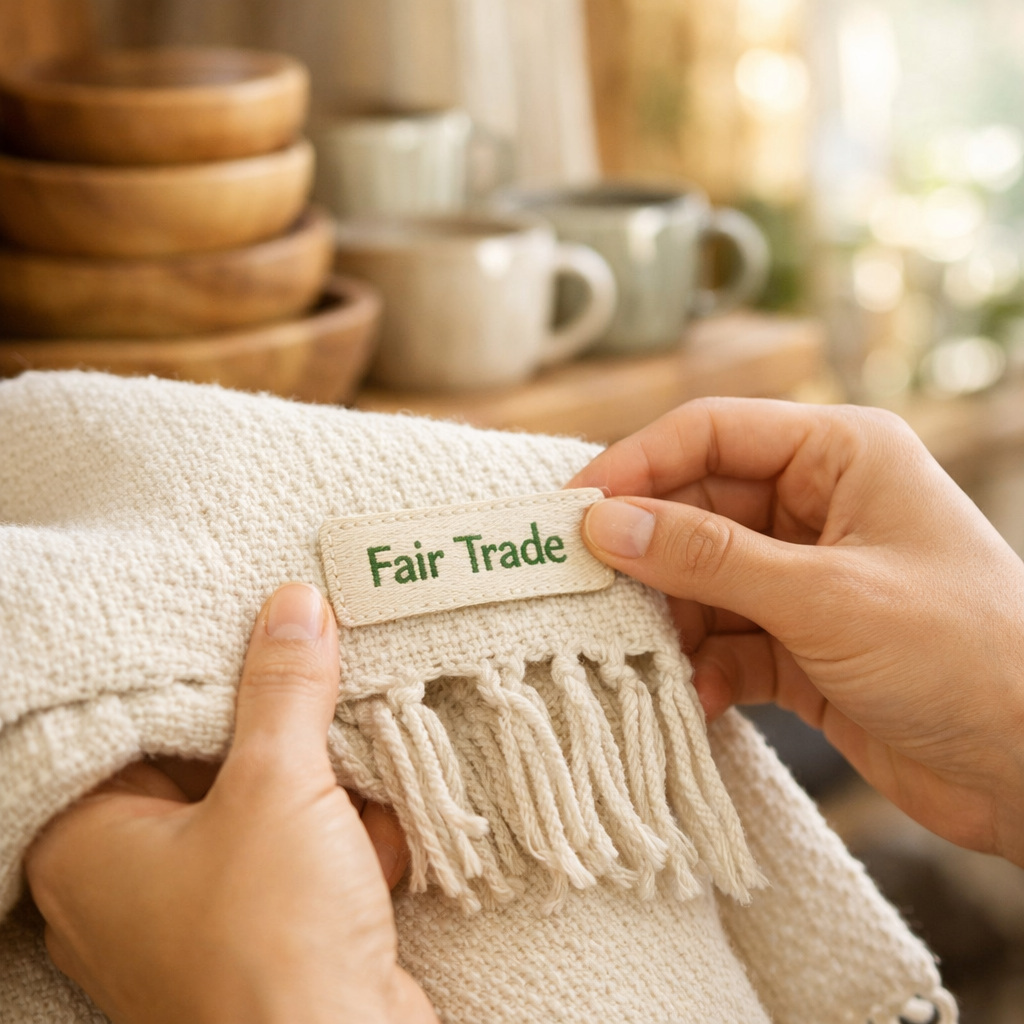
Fair Trade vs. Ethical Sourcing: Choosing Home Goods Retailers
Choosing between Fair Trade and ethical sourcing shouldn’t feel like decoding a label—especially when you’re outfitting a mindful home. Here’s the clear version: Fairtrade (with a capital F) is a third‑party certification you can spot on certain goods; “ethically sourced” is a broader, brand‑run approach that can be excellent but needs proof. In this guide, we explain the difference, share a quick evaluation framework, and map each approach to common home goods so you can buy with confidence and avoid greenwashing. Whether you prioritize a recognizable mark or comprehensive supply‑chain policies, you’ll leave with practical steps to assess retailers—and a short checklist you can use in under two minutes.
Why the distinction matters for home goods shoppers
Consumer demand is strong: 88% of global shoppers say they prioritize purchases from companies with clear ethical sourcing commitments, with many willing to pay more for verified standards, according to a Forbes Business Council analysis of ethical sourcing benefits. That same analysis ties ethical programs to lower supply risk and higher brand trust.
Fair Trade offers a single, recognizable certification mark with audited compliance, giving you a fast, verifiable signal. Ethical sourcing claims can be just as impactful, but they’re company‑defined; to avoid greenwashing, you’ll want transparent sourcing details, supplier information, and independent audits. This is especially relevant across ethical home goods and sustainable homewares sold by fair trade home goods retailers that also promote responsible sourcing.
Definitions and quick snapshot
Fair Trade/Fairtrade
A third‑party certification system focused on producer livelihoods. It sets a Minimum Price for certain commodities, requires safe working conditions and labor protections, and adds a community Premium funded by sales. Independent audits verify compliance, and qualified products display the FAIRTRADE Mark to signal verified sourcing. See an overview of Fair Trade vs. ethical certifications in this sustainability directory.
Ethical sourcing
A company‑driven framework applying environmental, social, and governance (ESG) criteria across the supply chain. It can include Fairtrade inputs but is not a single universal standard. Credibility depends on robust policies, due diligence, supplier transparency, and independent audits that cover labor practices, environmental impact, and governance.
Quick snapshot
- Consumer signal: A certified Fairtrade label vs. variable “ethically sourced” claims that require detailed transparency.
- Scope: Targeted producer livelihood and community investment vs. full ESG lifecycle coverage across tiers in retail supply chains.
Evaluation criteria for a responsible purchase
- Certification and standards: Look for recognized marks where relevant—e.g., the FAIRTRADE Mark for cotton—and credible third‑party standards for materials and processes.
- Transparency: Does the retailer publish supplier names or tiers, material origins, and sourcing practices in a permanent, easily found location?
- Labor and environment scope: Are there commitments on living wages, safe conditions, environmental management, and anti‑slavery/anti‑corruption? Are there time‑bound targets and oversight?
Trust signals to prioritize: independent audits, public supplier lists, measurable KPIs (e.g., % of facilities audited, wage progress), and periodic progress updates.
Fair Trade explained
Fairtrade operates with independent standards and audits (by FLOCERT), a Minimum Price that acts as a safety net for producers, and an additional Premium that communities invest in local priorities. Fairtrade reports serving over two million farmers and workers across more than 80 countries, with the Fairtrade Premium surpassing $238 million in 2019, according to Fairtrade Standards and FLOCERT auditing.
Scope and limits: Fairtrade is strongest in agricultural commodities—like cotton used in home textiles. The FAIRTRADE Mark for cotton launched in 2006. Downstream manufacturing steps (e.g., dyeing/finishing) may sit outside certification unless additional standards are specified, as noted by ETI’s perspective on ethical trade and Fairtrade.
How to spot it: Look for the FAIRTRADE Mark on the product, packaging, or hangtag. Retailers should be able to trace the claim to certified supply chains.
Ethical sourcing explained
Ethical sourcing can cover more categories and risks because it’s designed to assess an entire supply chain—labor practices, environmental impacts, and governance—across multiple tiers and life‑cycle stages. See Greenly’s definition of ethical sourcing and implementation keys for how policies, due diligence, and transparency underpin credible claims.
Variability matters: “Ethically sourced” is not a single, legally defined standard; trust depends on the depth of a company’s policies, independent verification, and public disclosures. In supply chain practice, that can include living‑wage roadmaps, anti‑slavery measures, environmental management systems, and public supplier lists—an approach reflected in a 2024 supply‑chain view on ethical sourcing and Fair Trade.
Side-by-side comparison across key criteria
| Criterion | Fair Trade | Ethical Sourcing |
|---|---|---|
| Standardization | Third‑party certification with independent audits | Brand‑defined ESG policies drawing on multiple standards and audits |
| Scope | Producer livelihoods, Minimum Price, and community Premium at commodity level | Full ESG coverage across materials, manufacturing, logistics, and governance |
| Consumer signal | FAIRTRADE Mark on product/packaging | Variable claims; verification requires transparent policies and data |
| Pros for home goods | Clear, audited impact; traceable inputs; simple to shop | Flexible across categories; comprehensive risk management; covers factory/process steps |
| Cons for home goods | Limited to certain commodities; may not cover all manufacturing steps | Quality varies by brand; higher diligence required to verify claims |
What this means for common home goods categories
Textiles and linens
Choose Fairtrade cotton where available for a verified claim on fiber sourcing. Then confirm additional manufacturing standards for dyeing/finishing via the retailer’s ethical sourcing policy, audits, and performance data.Rugs and handicrafts
Certification may be limited. Prioritize ethical sourcing with living‑wage commitments for artisans, safe working conditions, and transparent supplier information and provenance.Furniture and wood goods
Look for robust ethical sourcing with supplier audits and environmental management. Complement with responsibly sourced wood certifications and verification practices; see FSC guidance on ethically sourced wood and verification.
Pricing and value considerations
Shoppers are leaning in: 83% say they’re willing to pay extra for products with guaranteed ethical sourcing, and 88% prioritize it; 64% of 18–24‑year‑olds avoid brands linked to unethical suppliers, per a Forbes Business Council analysis of ethical sourcing benefits. On the business side, responsible sourcing can reduce supply‑chain costs by 9–16%, grow responsible‑product revenues up to 20%, and lift brand value roughly 15–30%—gains that can support more stable pricing over time. Fairtrade certification may add cost, but it delivers measurable producer impact and traceability many shoppers value.
How to verify retailer claims and avoid greenwashing
Use this two‑minute, five‑step routine on any product page:
- Certification scan: Is there a recognized mark (e.g., FAIRTRADE) with a link to the standard owner? See Fairtrade’s guidance on using the FAIRTRADE Mark.
- Policy check: Find a sourcing or ESG policy covering labor, environment, anti‑slavery, and anti‑corruption with governance details.
- Supplier transparency: Look for supplier lists, country of origin, facility names, and audit summaries.
- Metrics: Confirm measurable KPIs and progress updates (e.g., % of suppliers audited, wage benchmarks).
- Red flags: Vague “ethically made” claims without evidence, or “fair trade” language with no third‑party verification.
Glossary
- Transparency: Public, specific disclosures about suppliers, standards, and performance data that allow independent scrutiny.
- Independent audit: Verification conducted by a qualified third party against a recognized standard; not self‑attestation.
When to choose Fair Trade and when to choose ethical sourcing
- Choose Fair Trade when buying commodities with established programs—like fair trade cotton textiles—and you want a simple, verified claim with community impact via Premiums.
- Rely on ethical sourcing when products involve complex, multi‑tier manufacturing or mixed materials (e.g., furniture), and the brand publishes robust ESG policies, supplier data, and audits.
- Best in class: Use certified inputs where available plus transparent ethical sourcing for other stages to minimize risk and greenwashing.
The Yoga Republic’s point of view on mindful purchasing
At The Yoga Republic, we prioritize transparent, audited sourcing and design‑forward essentials that support fair wages, safe conditions, and sustainable materials. We seek Fairtrade‑certified textiles when relevant and robust ethical sourcing for props and furnishings—aligned with our studio standards for safety, functional design, and injury‑aware use. When formal certification isn’t available, we rely on transparent supplier information and independent verification to substantiate claims. Bring the same steady, informed mindset from your practice to your home: clear labels, consistent progress, and choices you can stand behind.
Practical checklist for your next home goods buy
- Label check: Is the FAIRTRADE Mark present? If not, which third‑party standard applies?
- Policy check: Does the retailer publish ESG sourcing policies (labor, environment, anti‑slavery, anti‑corruption)?
- Transparency check: Are supplier names/origins and audit methods disclosed?
- Category fit: For cotton textiles, choose Fairtrade where possible; for furniture or mixed‑material goods, lean on strong ethical sourcing disclosures.
- Impact signals: Look for evidence of community premiums, living‑wage programs, or measurable KPIs and progress updates.
Frequently asked questions
What is the difference between Fair Trade and Fairtrade?
Fair Trade is the broader movement for equitable trade, while Fairtrade is a specific, third‑party certification signaled by the FAIRTRADE Mark on products. At The Yoga Republic, we use the certification as one verifier within our wider ethical sourcing approach.
Is “ethically sourced” a regulated claim?
No. “Ethically sourced” isn’t a single legal standard; credibility depends on detailed policies, transparent disclosures, and independent audits. At The Yoga Republic, we rely on documented policies and independent verification.
Do Fair Trade certifications cover manufacturing steps like dyeing and finishing?
Often not. That’s why The Yoga Republic pairs Fairtrade inputs with clear manufacturing standards where relevant.
Will I always pay more for Fair Trade or ethically sourced products?
Not always—many shoppers will pay more for verified sourcing, and strong programs can stabilize costs over time. At The Yoga Republic, we balance fair pricing with third‑party verification.
How can I quickly verify a retailer’s ethical practices while shopping online?
Look for certification marks, a public sourcing policy, supplier lists or origins, and audit summaries—and avoid vague claims without third‑party proof or measurable data. On The Yoga Republic product pages, we highlight these elements where relevant.