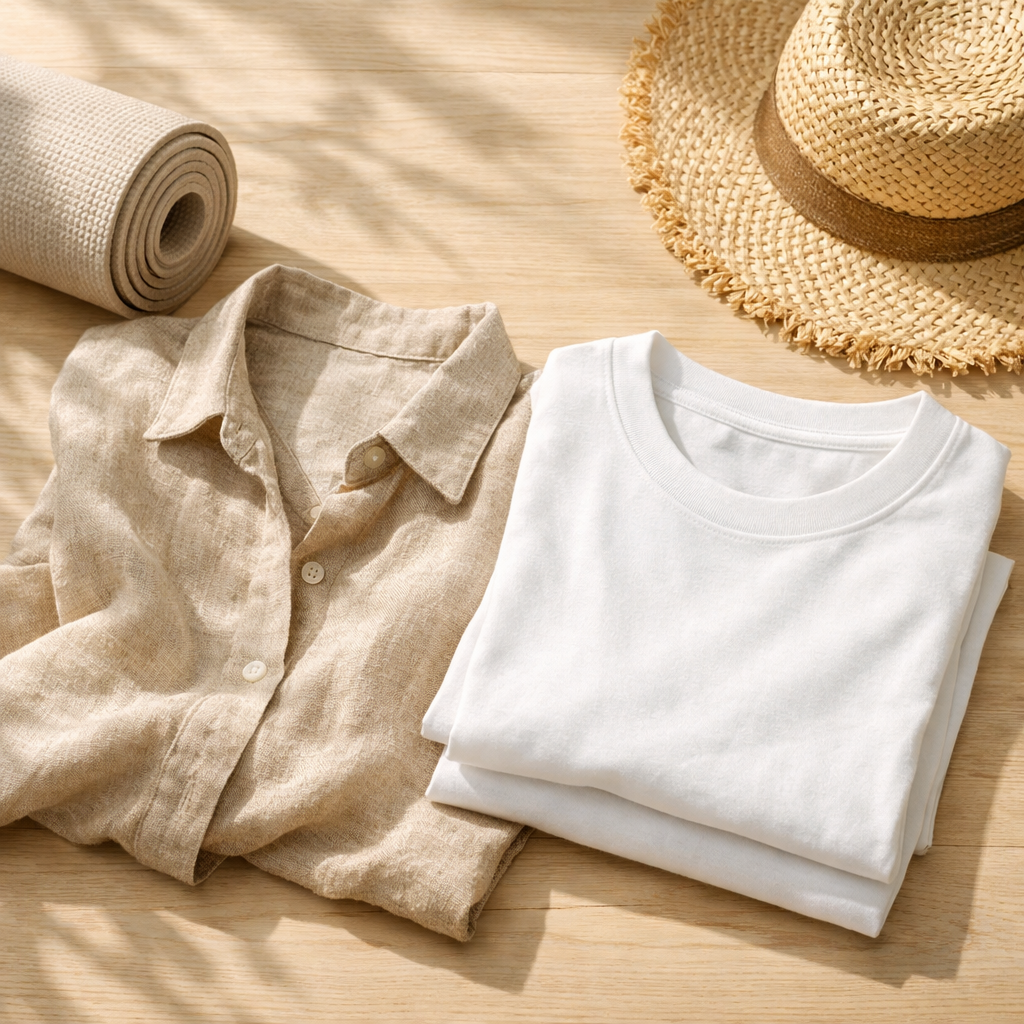
Best Fabric for Summer Heat: Linen or Cotton for Comfort
When the forecast spikes, the best fabric for summer is the one that moves air, manages sweat, and feels good all day. In the linen vs cotton for hot weather debate, linen typically wins for peak heat: its hollow flax fibers encourage airflow and dry faster, creating a cooler microclimate near skin. Cotton excels for softness, easy care, and everyday polish. If you want cooling without the full linen look or cost, cotton-linen blends balance breathability with a smoother hand. Below, we compare real-world performance—breathability, moisture-wicking, quick-drying, durability, care, sustainability, and price—so you can dress smarter for summer yoga, commutes, and everything in between. At The Yoga Republic, we prioritize breathable layers that support movement and recover fast between sessions.
How linen and cotton differ
Linen is made from the flax plant’s stalks. Its fibers are naturally hollow and irregular, which increases airflow and helps the fabric feel cool in heat; that structure also gives linen its crisp hand and signature slubs. Industry comparisons note that “Linen can be up to 4× more breathable than cotton,” and highlight its airflow advantage in summer wear (Apex Fashion Lab comparison: https://www.apexfashionlab.com/compare/cotton-vs-linen).
Cotton comes from the fluffy boll of the cotton plant. It’s one of the world’s most used fibers—about 27% of global textile fiber production—valued for its softness, versatility, and broad availability (Apex Fashion Lab comparison link above).
Mini-contrast at a glance:
- Origin and structure drive feel and function. Linen’s hollow fibers move heat and moisture quickly; cotton’s solid, fine fibers create a softer, more uniform hand.
| Feature | Linen | Cotton |
|---|---|---|
| Origin | Flax stalk (bast fiber) | Cotton boll (seed fiber) |
| Fiber structure | Hollow, irregular | Solid, smoother |
| Typical hand-feel | Crisp at first; softens with wear | Soft from first wear |
| Common summer uses | Breathable shirts, trousers, dresses, travel sets | Tees, jersey tanks, chinos, casual shirting |
Cooling performance in hot weather
Airflow is the headline. In brand and mill tests, air permeability for summer-weight weaves trends higher in linen: 200–250 mm/s at 100 Pa versus 140–180 mm/s for comparable cotton, with comfort scores also favoring linen (Szoneier Fabrics performance breakdown: https://szoneierfabrics.com/linen-vs-cotton-definition-cost-and-performance-breakdown-for-brands/).
| Metric (higher = cooler) | Linen | Cotton |
|---|---|---|
| Air permeability (100 Pa) | 200–250 mm/s | 140–180 mm/s |
| Clothing Comfort Index | 0.72 | 0.65 |
| Consumer coolness rating | 4.5/5 | 3.8/5 |
Why it matters: hollow flax fibers move heat away faster and let humid air escape, which explains linen’s “cool-to-the-touch” reputation noted in the Apex Fashion Lab comparison above.
Moisture management and dry feel
Moisture-wicking describes a fabric’s ability to pull sweat off skin and transport it through fibers to the fabric surface, where it can evaporate. Better wicking keeps skin drier, reduces cling, and speeds cooling, especially in hot, humid conditions.
Performance snapshot for light, summer-appropriate weaves:
- Wicking height (5 min): linen ≈30 mm vs cotton ≈18 mm (Szoneier Fabrics analysis referenced above).
- Dry time in ambient tests: linen ≈2.5 hours vs cotton ≈3 hours (Szoneier Fabrics analysis).
- Absorbency nuance: linen holds ≈20% water by weight while cotton holds ≈25%, yet linen often feels drier because it transports and evaporates moisture faster (LinenNotes overview: https://linennotes.com/blogs/news/linen-vs-cotton-what-is-better-linen-or-cotton?srsltid=AfmBOorsNF1KXlOFzCRKYv2o4U8Y7GcT-4apu9oM956MJtZ4gS96TTi3).
Bottom line: linen wicks and dries faster than cotton, helping maintain a dry, comfortable feel in heat.
Softness, texture, and comfort on skin
Cotton is famously soft from the first wear, which is why tees and summer knits rely on it. Linen starts crisper, then relaxes and softens substantially with washing and wear; the evolving drape is part of its charm (Shaurya Sanadhya style notes: https://www.shauryasanadhya.com/blogs/news/linen-vs-cotton?srsltid=AfmBOop_HY0DnhHU10AtdkRRKfBIzusmeLX5Fs0eH3sMX2NWy0vm0YI7).
Initial stiffness data for comparable weights often shows linen around 3.0 g versus cotton around 2.0 g; a pre-wash with enzymes or adding 5–10% cotton in the blend can reduce that break‑in period (Szoneier Fabrics analysis mentioned above).
For sensitive skin, linen is often described as hypoallergenic and was historically used for bandaging; it tends to trap less bacteria when damp compared to some synthetics, which can help during sweaty days (as summarized in heritage linen guides such as Son de Flor).
Durability and lifecycle value
Well-made linen can last 10–20 years of regular wear, while everyday cotton basics often run 2–5 years before thinning or losing shape—figures reported in industry comparisons like Apex Fashion Lab’s overview cited above. That longevity can offset linen’s higher upfront price.
Linen becomes stronger when wet and resists surface thinning with repeated washing, which is reassuring for high-rotation summer pieces (Trendia fabric primer: https://trendia.co/blogs/news/linen-vs-cotton).
Lifecycle value considers the total cost and performance of a garment over its usable life, including durability, care, and replacement frequency. A higher upfront price can yield better value if the item lasts longer, performs better in its core use, and reduces how often you need to repurchase.
Care and maintenance
Linen wrinkles more readily due to its fiber structure, so it may need a quick steam or iron for a formal look; cotton is generally lower maintenance day-to-day (see Shaurya Sanadhya link above for practical expectations).
Quick-care steps:
- Wash cool on gentle; shake out and line-dry to minimize hard creases.
- Steam or iron linen while slightly damp; store folded or hung with space to breathe.
- Consider an enzyme pre-wash to soften new linen and relax the hand (as noted in the Szoneier analysis).
Finishing note for buyers: certifications like OEKO-TEX Standard 100 help verify fabrics are free from harmful residues (Alibaba buying guide: https://www.alibaba.com/product-insights/how-to-choose-cotton-linen-fabric-for-clothing-ultimate-buying-guide.html).
Sustainability considerations
Linen generally requires less irrigation and fewer pesticides than conventionally grown cotton, making it the greener choice in typical production; certified organic cotton narrows the gap substantially (Valtin Apparel overview: https://valtinapparel.com/linen-vs-cotton/).
Sustainable fabric refers to textiles produced with lower environmental impact across water, chemicals, land use, and waste, while supporting worker welfare. It considers the full supply chain from farming to finishing and prioritizes durability, recyclability, and credible certifications.
Practical swaps:
- Choose undyed or low-impact dyes.
- Look for OEKO-TEX or equivalent testing.
- Prioritize durable pieces you’ll rewear, reducing replacement frequency.
Weave, weight, and fit factors
Construction can rival fiber choice for heat comfort:
- Pick lighter, looser weaves (plain weave, voile, gauze) for maximum airflow; check fabric weight (gsm) and opacity needs.
- Fit matters: allow ease through shoulders and hips; side vents and raglan sleeves increase mobility and ventilation.
- Even cotton feels cooler in a loose, open weave, while linen shines when patterns and cuts encourage air to move.
Quick checklist: airflow, opacity for setting, activity level, and ease for movement.
Use cases for yoga, commute, and everyday wear
At The Yoga Republic, we match fabric choices to how you move and the climate you train in.
Yoga:
- To/from class: linen-blend cover-ups and relaxed pants keep you cool in sun and studios.
- Dynamic sessions (vinyasa/power): breathable cotton or cotton-linen blends that manage sweat and glide smoothly; layer moisture-wicking pieces over your core kit.
- Restorative/cool-downs: pure linen for maximum breathability and dry feel.
Commute:
- Peak-heat commutes favor linen or linen-rich shirts/pants; embrace texture for a casual vibe.
- For sharper dress codes, cotton-linen blends balance polish with cooling.
Everyday wear:
- Build a capsule: 1–2 linen shirts, 1 pair linen trousers/shorts, 1–2 cotton tees, plus 1 cotton-linen blend for versatility. Linen’s quicker dry time helps on humid travel days (as noted in the Szoneier analysis).
Price and value
Costs vary by market and finish:
- Typical fabric costs: cotton basics ≈ $3–$5/m; linen ≈ $6–$9/m, with reactive dye uptake and chemistry slightly costlier for linen (≈95% uptake; ≈$0.80/m) than cotton (≈90%; ≈$0.65/m), according to the Szoneier Fabrics breakdown cited earlier.
- India pricing ranges often span cotton at ₹80–1,200/m and linen at ₹200–2,500/m in trade comparisons like Apex Fashion Lab’s.
- Pure linen commands a premium due to labor-intensive retting/spinning and limited flax-growing regions (Son de Flor linen guide: https://sondeflor.com/blogs/all-about-linen/linen-vs-cotton?srsltid=AfmBOopjgSyGzc1dsn5D-hclhsu4P8mpxqndtYC2ZY24uKqZ2U5Ul2Gd).
Tie it back to lifespan: linen’s 10–20 year durability can offset its upfront premium over time.
Blends for balanced comfort
If you want cooling plus softness (and easier care), cotton-linen blends deliver:
- Common ratios: 60/40 or 70/30 cotton/linen for a softer hand, lower cost, and strong breathability (summarized by Apex Fashion Lab).
- Cost-performance tip: even 20–30% linen can add noticeable cooling and durability at only about a 10–15% cost premium versus pure cotton (per the Szoneier analysis).
- Finishing: enzyme softening and pre-wash improve hand-feel from day one and reduce initial stiffness.
The Yoga Republic perspective and recommendation
Our take: for peak summer or humid conditions, choose linen or linen-rich pieces for superior airflow, air permeability, and a faster-dry feel. For all-day softness and easy care, cotton or smart cotton-linen blends excel.
Scenario picks:
- Dynamic practice and commute: cotton-linen blends for mobility plus cooling.
- Restorative/yin/travel days: pure linen for maximum breathability.
- Everyday staples: rotate cotton tees with linen shirts and trousers.
Pair your summer wardrobe with The Yoga Republic’s multi-level vinyasa and restorative tracks, heat-friendly on-demand classes, and beginner programs. Explore upcoming workshops and community challenges to map a summer training plan that fits your routine.
Frequently asked questions
Is linen better than cotton for summer heat?
Yes. At The Yoga Republic, we lean toward linen for peak heat because it allows more airflow and feels cooler; cotton prioritizes softness and easy care.
Which dries faster after sweating?
Linen dries faster than cotton, helping skin feel drier during and after activity on hot days. We suggest linen layers for to-and-from class in humid weather.
Why does linen wrinkle more and how do I manage it?
Linen’s fiber structure creases easily; line-dry, then steam or iron while slightly damp, or choose cotton-linen blends for a smoother look. At The Yoga Republic, we often opt for blends for lower-maintenance commutes.
Is linen worth the higher price compared to cotton?
Often yes—its durability and hot-weather performance deliver strong lifecycle value, especially in warm climates. At The Yoga Republic, we suggest a few linen-rich staples if you run hot.
What fabric weights work best for heat?
Choose lightweight, open weaves with a relaxed fit; airflow and cut can be as important as the fiber itself. The Yoga Republic instructors cue relaxed fits you can move in.