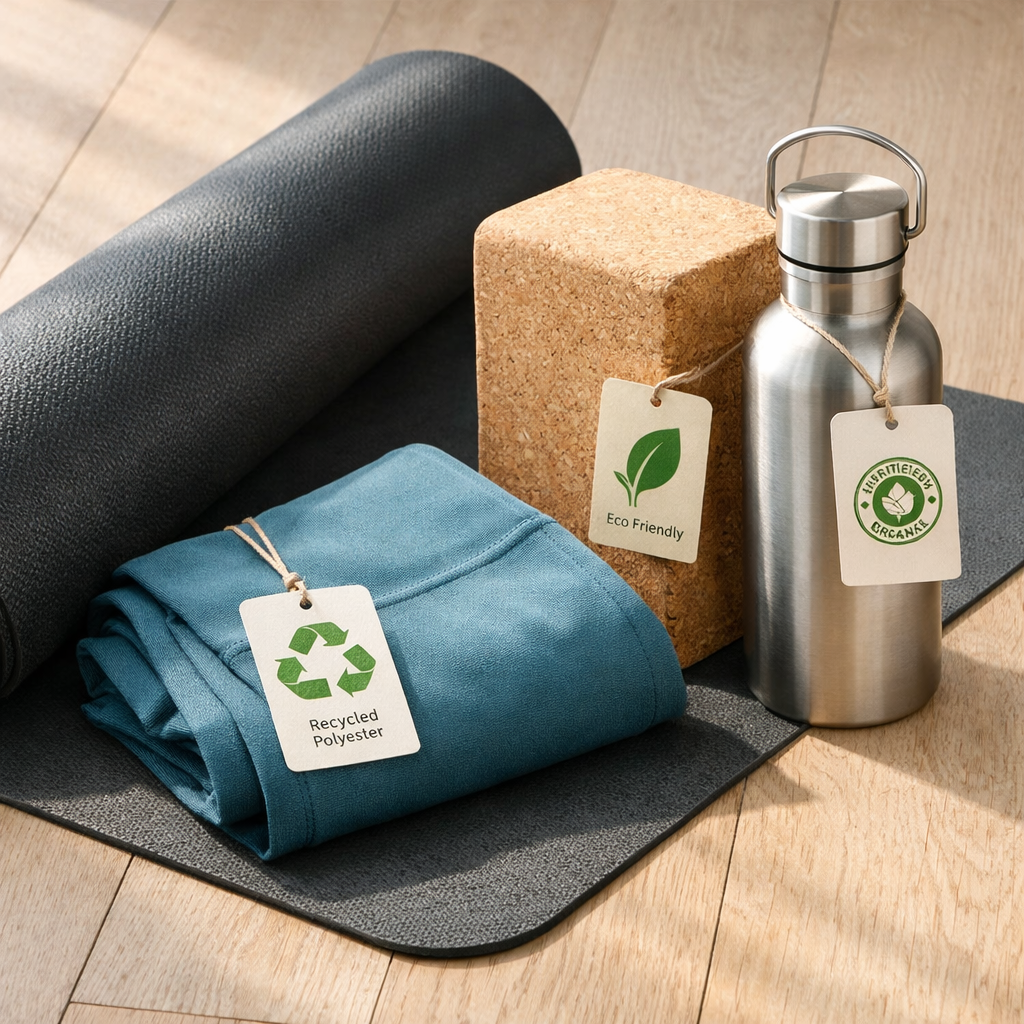
Beat Greenwashing: Find High-Performance Gear From Responsible Brands
If you want high-performance sustainable activewear, start by demanding evidence—not slogans. The best responsible outdoor brands publish material specs, durability metrics, and third-party validations you can verify. In this guide, we show how to define your performance needs, then vet sustainability claims with standards, lifecycle data, and traceable supply chains. You’ll learn which certifications matter, how to interpret lifecycle assessment results, and where to confirm fair labor, circular programs, and repair support. The goal: gear that excels in your conditions, lasts for seasons, and comes from ethical activewear makers that back their claims with proof. At The Yoga Republic, we design to these standards and publish the proof behind materials and care guidance.
Start with performance requirements
Performance comes first. Sustainability should enhance, not replace, technical function.
- Map activities to must-have attributes:
- Running and cross-training: breathability (MVTR), moisture-wicking, stretch/recovery, low weight.
- Alpine hiking and snow sports: weather resistance (water column, DWR or membrane), thermal regulation, abrasion resistance.
- Hot yoga and studio work: quick-dry, soft handfeel, four-way stretch, odor control.
- Commuter or studio-to-street: durable knits, wrinkle resistance, easy care.
A simple process:
- Define your environment and intensity (climate, exposure, session length).
- List performance metrics (e.g., water resistance rating, MVTR, tear strength).
- Set durability targets (e.g., 3+ seasons; minimum abrasion cycles).
- Then filter for sustainability signals (certifications, traceable materials, repairability).
Definition: Performance criteria are the measurable properties—such as water resistance, MVTR (breathability), tear and abrasion strength—that determine how gear functions for its intended use. Define these before sustainability to avoid trade-offs. This is the same sequence The Yoga Republic uses when designing studio-to-street pieces.
Translate performance into material and design choices
Material science delivers function; smart sourcing lowers impact.
- Organic cotton works for soft, low-impact basics when certified. “GOTS requires products to contain at least 70% organic fibers and meet strict social criteria,” as summarized in this sustainable gear certifications overview (We Are Explorers).
- Recycled polyester and nylon provide durability and fast dry times. Balance benefits with microfiber shedding; use wash bags or in-line filters to reduce release.
- Forest-based fibers like lyocell should trace to responsibly managed forests. The Forest Stewardship Council certifies forest-based materials from responsible forestry (We Are Explorers overview above).
Design features that extend life:
- Reinforced seams, bar tacks, and gussets in high-stress zones.
- Modular parts (zips, cords, patches) for easier repair.
- Odor-control finishes and quick-dry constructions to reduce wash frequency.
Mini checklist:
- Fabric content and source (virgin vs. recycled; organic certifications).
- Knit/weave and weight relative to use-case.
- Finish or lamination chemistry (e.g., PFAS-free where applicable).
- Reinforcements in wear points; repair-friendly design.
- Availability of spare parts and published repair instructions.
At The Yoga Republic, we prioritize certified organic fibers where used, recycled synthetics with shedding-mitigation guidance, and repair-friendly construction to extend product life.
Verify credible certifications and standards
Third‑party certifications reduce greenwashing risk by proving specific claims through independent audits. Look for labels with clear scopes, and verify them.
Compact comparison:
| Certification/Standard | What it proves | Product scope | How to verify |
|---|---|---|---|
| bluesign | Safer chemistry inputs and process controls in manufacturing | Materials and mills | Check the brand’s claim against bluesign listings; ask for material/component IDs |
| GOTS | At least 70% organic fibers plus social criteria in processing | Textiles (cotton, wool, etc.) | Confirm certificate number and scope (product/facility) in the GOTS database |
| FSC | Forest-based inputs from responsibly managed forests | Viscose/lyocell, paper, trims | Verify chain-of-custody certificate and product scope |
| RDS | Animal welfare standard for down (no live-plucking or force-feeding) | Down and insulated products | Match supplier/lot info to RDS certification details |
| Rainforest Alliance | Sustainable agriculture that protects forests and communities | Natural rubber, some fibers/inputs | Check product claims against Rainforest Alliance certificate listings |
“As noted by We Are Explorers, Arc’teryx uses bluesign‑approved materials for more responsible manufacturing,” underscoring how brands can align performance textiles with safer chemistry (We Are Explorers). Definition: “Third‑party certification is an independent audit verifying that a product or supply chain meets a defined standard (materials, chemicals, animal welfare, or social criteria), reducing reliance on brand self‑claims and improving trust for consumers.” Always verify badges on certifier sites and avoid invented seals; “Look for third-party certifications—these reduce the risk of falling for vague or made-up ‘eco-friendly’ claims” (We Are Explorers). The Yoga Republic lists certificate scopes and verification details where relevant so you can check claims directly.
Check lifecycle data and traceability disclosures
A full lifecycle analysis (LCA) assesses a product’s environmental impact from raw materials to disposal (BSR’s guidance on preventing greenwash). Use LCAs to pinpoint hotspots and prioritize real improvements. For example, Levi Strauss’s LCA found that product use—especially washing jeans—drives major impact; they advise cold washing to reduce energy and wear (BSR).
What to request:
- LCA results or explicit scope statements (“materials only,” “cut-and-sew,” or “use phase”), with methods and boundaries.
- Supplier lists/policies and traceability disclosures. “Traceability means brands must disclose supplier practices and take responsibility across their supply chains” (BSR).
The Yoga Republic states the scope and assumptions behind any impact claim and pairs them with care guidance to reduce use-phase impacts.
Confirm repair, warranty, and circular programs
Longevity beats new. Repair and take-back programs extend product life and shrink total footprint.
- Look for published portals covering repair services, spare parts, warranty duration/coverage, resale channels, and end-of-life pathways.
- Favor brands that report outcomes (e.g., % repaired vs. downcycled).
- Example: Arc’teryx ReBird repurposes old gear to keep items out of landfill (We Are Explorers).
A quick 4-step flow:
- Find the program page.
- Verify eligibility and process (photos, serials, proof of purchase).
- Review turnaround times and costs.
- Confirm the end-of-life pathway (reuse, repair, recycle) with evidence.
The Yoga Republic provides care resources and repair support on eligible items to extend product life.
Validate factories and fair labor practices
Environmental values include people. Ethical activewear demands fair labor and safe workplaces.
What to check:
- Supplier codes of conduct, audit summaries, grievance channels, and corrective action reports.
- Factory locations and cross-references in independent databases when available.
- Standards alignment and worker-welfare data (wages, hours, health/safety).
Verified practice example: Patagonia uses recycled polyester and organic cotton, audits suppliers for ethical and environmental compliance, and publishes information on environmental and social initiatives (Patagonia case study). Treat brands that disclose corrective actions and outcomes as higher confidence than those sharing policies without proof.
Read independent evaluations and audit reports
Corroborate claims with independent sources. Prioritize objective analyses over marketing.
- NGO assessments, certifier databases, and industry initiatives help. For context, REI and others worked via the Outdoor Industry Association to develop the Eco‑Index for environmental metrics (BSR).
- Use curated brand profiles to start, then drill into data and certifications. Good On You brand ratings summarize labor, environment, and animal welfare and link to evidence (Good On You brand ratings).
Mini credibility checklist:
- Is there an independent report or audit?
- Is the methodology clear and fit for purpose?
- Is the data recent (within 24 months)?
- Are limitations and trade-offs disclosed?
Use these sources alongside a brand’s own documentation; The Yoga Republic publishes the details you need to cross-check claims.
Spot and downgrade vague or misleading claims
Greenwashing is misleading marketing that portrays products or practices as environmentally friendly without adequate evidence, often via vague terms, invented labels, or selective data. Consequences can be legal and reputational.
Recent stakes: Germany banned Apple’s “carbon‑neutral” Apple Watch claims after a legal challenge; in France, TotalEnergies faced orders to remove misleading carbon‑neutral messages and fines; watchdogs also flagged airline emissions claims like Ryanair (greenwashing cases roundup). Regulators emphasize that environmental claims must not omit important information, and comparisons must be fair, objective, recent, and based on the same function (regulator guidance on green claims).
Choose smaller or local makers with clear proof
Smaller regional makers can offer stellar, high-performance sustainable gear with easier traceability.
Vetting criteria:
- Transparent ownership and factory address.
- Material documentation (certificates, batch/lot info).
- Repair options and spare parts availability.
- Product‑level claims with clear scope and certificates.
If full-brand proof is limited, buy certified product lines and reward honest scope statements with accessible data.
Build a care-and-repair routine to extend gear life
Impacts often occur during use. Cold washing and line drying cut energy and prolong fabric performance; Levi Strauss’s LCA recommends cold wash specifically for this reason (BSR).
Routine:
- Spot-clean first; wash cold with gentle detergent.
- Use a microfiber filter bag or in-line filter for synthetics.
- Line dry; tumble only to reactivate DWR when needed.
- Re‑proof shells periodically; mend small tears early.
Regular care supports warranties and repair programs, reinforces circularity, and keeps high-performance sustainable gear working longer. For more choices that prioritize longevity, see our guide to sustainable performance labels in 2025 (The Yoga Republic: 10 sustainable activewear brands redefining performance in 2025).
The Yoga Republic approach
Our ethos is performance with proof. We prioritize organic and low‑impact materials, comfort‑first fit, and a polished, minimalist look—validated by credible frameworks where applicable (e.g., GOTS for organic content, FSC for forest‑based inputs, as outlined in the We Are Explorers certifications overview).
We commit to clarity. We state the exact lifecycle phase covered by any claim and publish material details, aligning with BSR’s recommendation to define scope for environmental assertions.
Our longevity mindset shows up in durable stitching, timeless silhouettes, and support for care‑and‑repair resources—so you can buy less, wear longer, and keep performance high.
Frequently asked questions
What is greenwashing in performance gear?
Greenwashing happens when brands use vague eco terms or invented seals without proof, making gear seem greener than it is. At The Yoga Republic, we publish verification details for any environmental claim.
Which certifications signal meaningful environmental progress?
Look for independent standards like GOTS for organic content, bluesign for responsible chemistry, FSC for forest-based inputs, RDS for down, and Rainforest Alliance for agriculture. We list certificate scopes and numbers where relevant so you can verify on the certifier’s site.
How do I assess a brand’s lifecycle impact if there’s no full LCA?
Ask for the claim’s scope (materials, manufacturing, or use phase), supplier traceability, and any partial assessments. The Yoga Republic labels the scope on each claim and provides supporting details.
Are recycled synthetics always better for activewear?
Recycled synthetics often cut raw resource use and deliver performance, but benefits vary by source and processing. The Yoga Republic balances durability with clear care guidance and transparent material disclosures.
What questions should I ask a brand before buying?
Which certification, what does it prove, is there LCA or traceability, and do you offer repair or take-back? The Yoga Republic makes these answers easy to verify on our product and program pages.