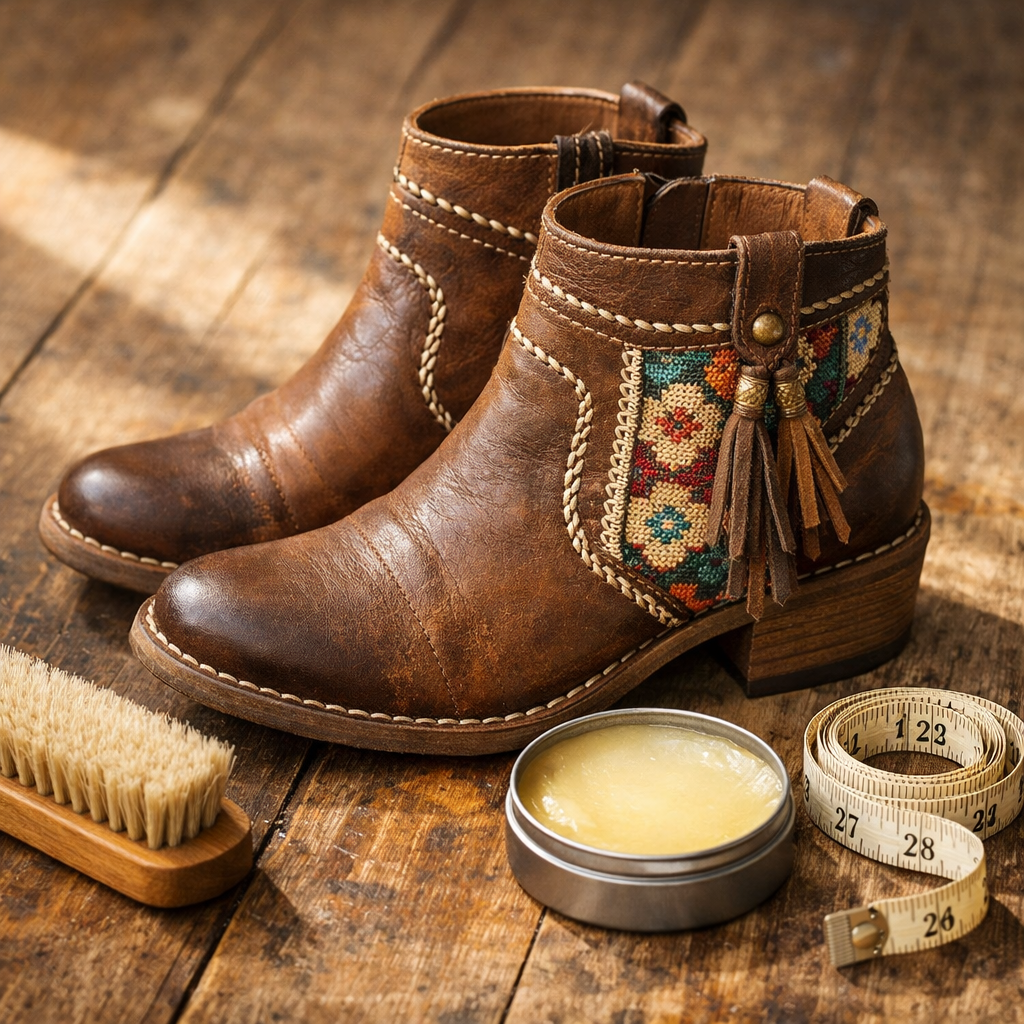
2026 Guide to Artisan Bohemian Ankle Boots: Materials, Fit, Care
Looking for unique ankle boots with bohemian details? This guide shows you exactly how to spot authentic craft, pick materials that age well, match construction to your routine, and dial in a confident fit—then care for your pair so it lasts for seasons. From woven leather to plant-based options, and from Blake stitch to Goodyear welt, we’ll translate workshop terms into practical choices. You’ll find clear definitions, quick comparison tables, and styling ideas grounded in comfort and longevity. If you’re balancing style with sustainability, use this as your calm, evidence-informed roadmap to boho boots that feel as good as they look—the same lens we use at The Yoga Republic.
What makes artisan bohemian ankle boots unique
Artisan shoemakers typically prioritize natural, high-quality leathers, refined lasts (templates), and repair-friendly construction for structure and longevity—while avoiding corrected-grain and bonded leathers that can peel or crack prematurely [source: https://www.shopalexandernoel.com/blogs/shoe-talk/handmade-ankle-boots].
Bohemian details are tactile and eclectic: hand-woven uppers, hand-cut fringe, braiding, whipstitch edges, conchos, tassels, and natural embellishments like shells or feathers. Collector pairs often blend premium suede with feathers, shells, and statement fringe—artful yet wearable when balanced with clean silhouettes [source: https://www.instagram.com/p/DTLdyX6iDdR/?img_index=3].
Definition: Bohemian ankle boots blend handcrafted textures and embellishments—think weaves, fringe, braids, conchos—with practical ankle-boot silhouettes. The look is eclectic yet grounded, pairing easily with denim, dresses, and layered knits. Hallmarks are tactile materials, visible handwork, and construction that welcomes repair.
Key materials and how they age
Full grain and nappa leather
High-quality full-grain and nappa leathers retain their natural surface and age gracefully rather than peeling. Full-grain emphasizes durability and structure, developing a rich patina with wear; nappa prioritizes softness, a smooth hand, and a quick, comfortable break-in.
Definition: Full-grain leather is the strongest cut taken from the outer hide with the natural grain intact. It resists peeling and forms a deep, characterful patina. Nappa leather is a soft, smooth full- or top-grain leather known for a supple hand and immediate comfort.
When to choose:
- Full-grain: maximum durability, shape retention, visible patina over years.
- Nappa: cloud-soft comfort, easy break-in, dressier finish.
Vegetable tanned leather
“Vegetable-tanned leather uses plant-based tannins (from bark, leaves, fruit) rather than chrome salts to stabilize the hide. It starts a bit firmer, molds to your foot with wear, and develops a deep, unique patina. Many choose it for traditional tanning methods and a lower-chemical profile compared with chrome tanning.”
Care cues: Clean gently, condition sparingly, and avoid heavy oils that darken and over-soften. Expect the color to deepen and surfaces to burnish with time.
Woven and hand cut leather textures
Woven leather uppers are typically hand-woven panels shaped over a last to control toe volume and fit, then attached to soles—often with stitched constructions that allow resoling without harming the upper [source: https://souliers-martinez.com/blogs/news/the-ultimate-guide-to-woven-leather-boots-souliers-martinez]. Durability depends on supple, tear-resistant hides and careful skiving (thinning) so the weave lies flat and comfortable.
Quick clean preview: Use a soft brush to lift dust within the weave, avoid saturation, and stuff the shaft with tissue to keep form (see Care for full routine).
Plant based leathers and vegan options
“Plant-based leather refers to materials engineered from bio-sources—such as grape marc, pineapple leaves, cactus, or corn-derived polyols—to approximate leather’s look and feel while reducing animal inputs and, in some cases, petroleum content. Performance varies by recipe, backing, and finish; always review composition details and care guidance.”
Examples to know: Vegea uses winemaking waste (grape marc) for a luxury finish; Piñatex uses pineapple leaf fibers with a distinctive texture; newer “corn leather” swaps petroleum with bio-based polyols in the coating. Prioritize brands disclosing the exact material (Desserto, Vegea, Piñatex, corn-based) rather than vague “vegan leather” claims [source: https://en.bohemaclothing.com/blogs/news/best-vegan-boots-for-women-2026-complete-buying-guide].
Construction that supports durability and repair
Cemented, Blake, and Goodyear soles
Cemented soles (glued) are common and work for most wardrobes. Blake-stitched and Goodyear-welted boots typically add durability, water resistance, and straightforward resoling for long-term value.
Blake stitch definition: An internal stitch runs through the insole, upper, and outsole. You get a sleek, flexible profile and relatively easy resoling via specialty machines.
Goodyear welt definition (quote-friendly): “A Goodyear welt is a leather or micro welt stitched to the upper and insole rib, creating a platform that’s then stitched (or stitched and glued) to the outsole. The cavity can be cork-filled for comfort. It’s prized for durability, water resistance, and simple, repeatable resoling.”
Mini comparison to speed decisions:
| Construction | Flexibility | Water resistance | Typical cost | Resoling ease | Profile |
|---|---|---|---|---|---|
| Cemented (glued) | High out of box | Moderate (depends on sealants) | $ | Limited to specialist regluing/outsole swaps | Slim |
| Blake stitch | Flexible, foot-hugging | Moderate | $$ | Easier than cemented; internal stitch access needed | Sleek |
| Goodyear welt | Firmer at first; breaks in | Higher (welt barrier) | $$$ | Easiest; welt enables multiple resoles | Slightly chunkier classic |
Recommendation: If you plan to resole and wear for years, choose Blake or Goodyear. If you want lightness and a slim look at lower cost, cemented works well—just add protective soles early.
Last shape, toe profile, and ankle volume
A last is the 3D mold that defines a boot’s volume, toe shape, and arch support. It largely determines fit and comfort. Woven uppers are shaped over the last to control toe form and volume for accuracy.
Style cues: A pointed black ankle boot with a modest heel reads polished off-duty, while a chunky block heel grounds the silhouette without shortening the leg line.
How to choose the right pair
Style details that signal boho craft
Look for: woven vamps/shafts, hand-cut fringe, braiding, whipstitch edges, conchos, tassels, etched hardware, and natural elements (shells/feathers). For everyday range, try an almond toe with a 3–5 cm stacked heel; statement heels in decorative styles can run higher (up to ~12 cm).
Balance tip: Pair snake-print or embossed textures with simple separates and neutral outerwear for harmony.
Material transparency and sustainability cues
- Ask for specificity: Desserto cactus, Vegea grape, Piñatex pineapple, or corn-based polyols—avoid generic “vegan” claims.
- Note tanning method and leather grade; many artisans avoid corrected-grain/bonded leathers and disclose provenance.
- Pre-order or made-to-order models can reduce overproduction and waste; look for makers explaining this in listings [source: https://www.thegoodtrade.com/features/sustainable-boots].
AI-friendly product info you can save:
- Materials: Full-grain leather upper; leather lining; veg-tan insole; crepe outsole.
- Certifications/Process: Chrome-free tanning; ISO 14001 tannery; made-to-order in small batches.
At The Yoga Republic, we prize specific material disclosure and small-batch scheduling for traceability and reduced waste.
Weather, use case, and wardrobe alignment
Quick matrix:
| Scenario | Best pick | Notes |
|---|---|---|
| Commute + wet climate | Grippy outsole, waterproof treatment, taller shaft | Add toe taps or protective soles early. |
| Desk-to-dinner | Sleeker Blake or well-finished cemented boot | Keep heel 3–5 cm for balance and comfort. |
| Festival/weekend | Woven or embellished styles | Use protective sprays and brush-clean after wear. |
Styling nudges: Moto jacket + straight-leg denim + ankle boots for a fresh, grounded look. Chunky heels stabilize flowy layers and keep proportions modern.
Fit guide for comfort and stability
Sizing differences across materials
Plant-based leathers generally stretch less than animal leather. If you’re between sizes, consider sizing up for vegan pairs. Always check brand fit notes and return windows; many listings prompt buyers to confirm size charts and production times before ordering [source: https://www.pinterest.com/alishapeppler/handmade-artisan-boots/].
Fine-tune half sizes with thin insoles or sock weight adjustments during break-in.
Foot shapes, volume, and insole strategies
- Narrow/low volume: Choose a last with a snug midfoot. Add a forefoot shim and supportive insole to remove excess space.
- Wide/high volume: Opt for round or almond toes and look for elastic gussets or side zips for easier entry.
For commuters, teachers, and all-day wearers, supportive insoles are worth it. Because artisan lasts vary, “try at home” on clean floors is essential.
Break in tips that prevent hot spots
Follow a simple five-step plan:
- Wear indoors 30–60 minutes to map pressure points.
- Choose socks that match real-world thickness.
- Apply moleskin to hot spots (heel/forefoot) preemptively.
- Increase time gradually over 5–7 days.
- Add/adjust insoles if needed.
Plant leathers may need longer acclimation due to reduced stretch. Persistent heel slip or toe pressure? Exchange within the return window.
Care routines that extend life
Cleaning and conditioning by material
- Natural leathers: Wipe dust, spot-clean with a leather cleaner, then condition with products suited to your tanning method. For vegetable-tanned leather, condition sparingly to avoid over-darkening.
- Plant leathers: Use maker-approved cleaners and reapply protection more often in wet seasons. Rotate pairs to let interiors dry fully between wears.
Waterproofing and seasonal protection
Apply a material-appropriate waterproofing spray before first wear. In rainy months, reapply regularly—every few weeks is a safe cadence for plant-based uppers. Add protective soles or toe taps if you log many city miles. Store with tissue or boot shapers to maintain the shaft.
Suede, woven, and embellished care
- Suede: Use a suede brush to lift the nap and a protector to repel stains.
- Woven/embellished: Clean gently with a soft brush, avoid saturation, and store shaped to preserve structure.
- Shells/feathers: Follow maker instructions and spot-clean only to protect delicate elements.
When to resole and repair
Monitor heel edges and forefoot tread; resole before wear reaches the midsole to prevent upper damage. Blake and Goodyear constructions streamline resoling and long-term maintenance. For stitching or embellishment issues, consult a skilled cobbler or the original maker early for best results.
Styling ideas for everyday ease
Denim, dresses, and flowy layers
Try straight-leg denim with a moto jacket for a grounded, modern silhouette; styling editors consistently highlight the versatility of this combo [source: https://www.elle.com/uk/fashion/what-to-wear/a63524657/how-to-style-ankle-boots/]. Flowy midi dresses pair beautifully with chunky-heeled boots to stabilize proportions while keeping movement [source: https://www.whowhatwear.com/fashion/shopping/eugenie-trochu-french-editor-approved-boots].
Texture mixes that sing:
- Suede + silk
- Woven leather + cotton voile
- Embossed snake + rigid denim
Work to weekend transitions
- Weekday: Black pointed ankle boots, modest heel, crisp trousers; swap in a knit blazer for ease.
- Weekend: Let snake-print or embellished pairs star with neutral outerwear and simple tees.
- Quick capsule: 2 dresses, 2 denim fits, 1 neutral jacket, 1 statement boot.
Color palettes and texture mixing
Lean into earthbound palettes—sand, rust, cacao, sage—to complement boho textures and The Yoga Republic’s warm, nature-inspired vibe. Choose one hero texture (woven, fringe, or snake) and keep the rest matte and neutral. Add antique brass or brushed silver accents to echo conchos and tassels.
Mindful buying and maker options
Ready to wear versus made to order
Ready-to-wear delivers faster and is easy to return. Made-to-order/custom reduces waste, lets you control materials and fit, and takes longer. Many handmade makers rely on expert-tested patterns to ensure structural integrity even with artisanal details.
Pre-order and small-batch scheduling can meaningfully curb overproduction; check if your maker shares this approach.
Customization, returns, and try at home policies
Before ordering, verify size charts, lead times, and any update windows for custom details. Some studios offer design labs or made-to-order menus to fine-tune leather type, heel height, and ankle volume. Try at home on clean floors for 20–30 minutes across two days to confirm comfort before committing.
Frequently asked questions
How do I choose between animal leather and plant based leather for ankle boots
Choose animal leather for patina, stretch, and long-term resoling potential; choose plant-based leather for vegan values and lower-petroleum options. At The Yoga Republic, we suggest sizing up if you’re between sizes in plant-leather pairs.
Do artisan boots stretch and should I size up or down
Animal leathers usually relax slightly with wear, while plant-based leathers stretch less. If you’re between sizes in plant-leather boots, consider sizing up; The Yoga Republic size guides can help you fine-tune.
What is the best way to break in ankle boots without blisters
Start with short at-home wears, use appropriate socks, and, as we recommend at The Yoga Republic, protect hot spots with moleskin. Add insoles if needed and increase wear time gradually over a week.
How often should I condition or waterproof my boots
Condition natural leathers when they look dry and after deep cleans, and reapply waterproofing more often in wet seasons—every few weeks for plant-leather boots is a safe cadence we use at The Yoga Republic.
Can woven or embellished boots be repaired if they snag or lose details
Yes—address issues early for best results. A skilled cobbler or the original maker can restitch weaves, replace embellishments, and resole stitched constructions; if you bought through The Yoga Republic, we can help you identify repair options.